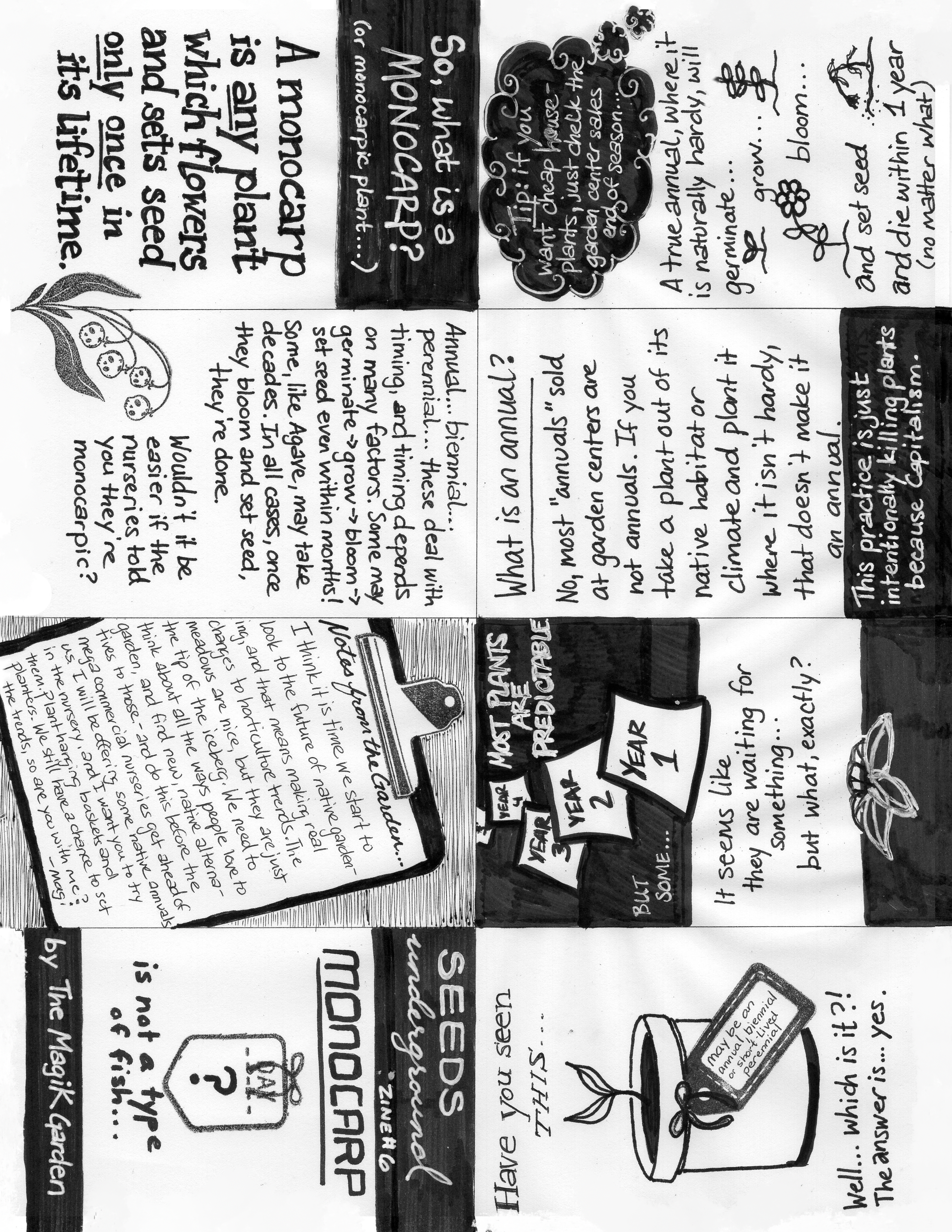
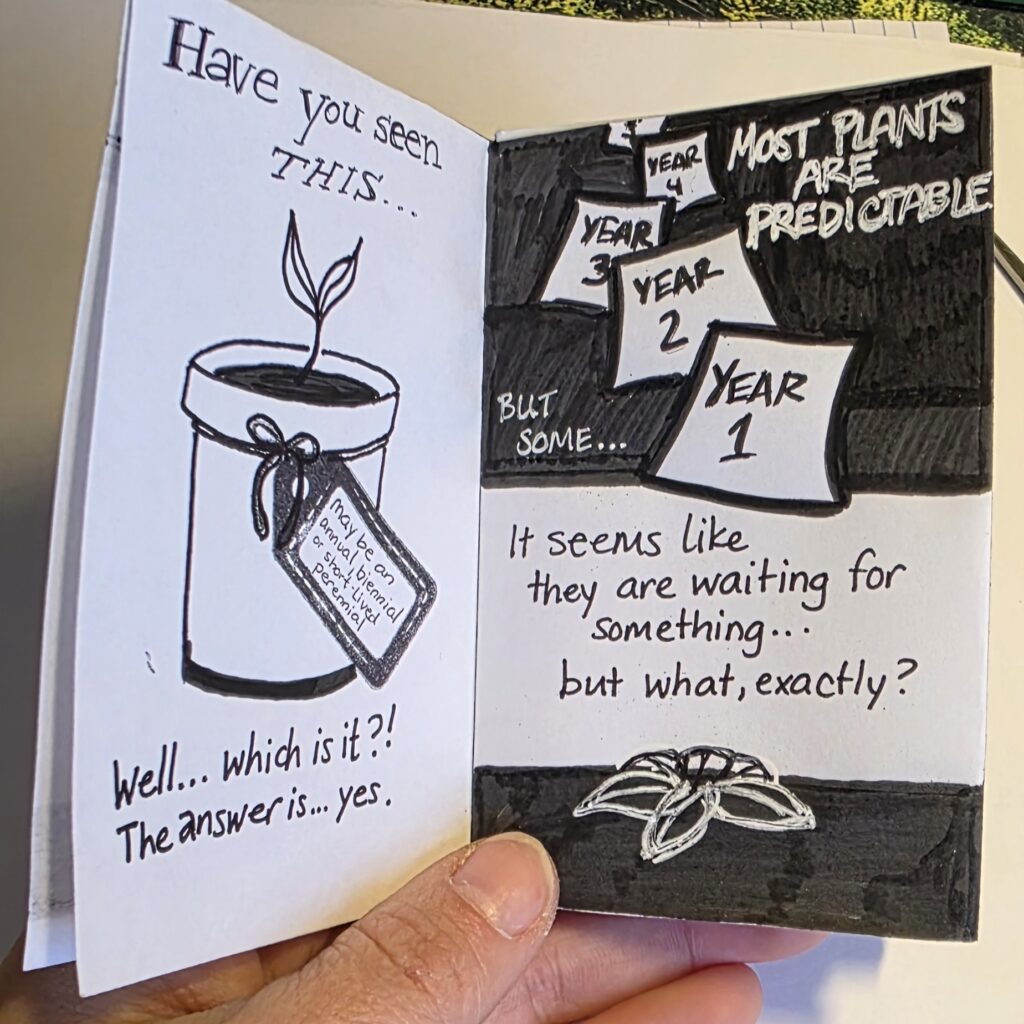
One thing I often see from gardeners (and certainly had me confused early on) is the confusion in reading a plant is “annual, biennial, or short-lived perennial.”
Well, which is it? Either it is, or it isn’t, right? Gee, thanks… that’s so helpful. Not.
I also will blame garden centers for screwing up the definition of annuals. Yeah, I know we learned the difference between annuals and perennials in grade school. I don’t know about you, but I have retained very little information from grade school. I remember far more about the social order of my classmates, and our obsession with things like Jax and Polly Pockets than what was taught in class. I guess that’s what happens when you’re just forced to memorize facts from books for a test and then move on.
Yeah, I do have some criticisms about the education system as it is currently taught, and that’s why I homeschool. Note, I’m not THAT type of homeschooler – I also fully support public education as good and necessary, and I recognize there are really good teachers. There is much room for improvement, but that doesn’t mean I support abolishing the Department of Education. I was under the impression we could improve things without completely and utterly destroying them first. One of those things would be a proper civics education… not social studies, whatever that is, which seemed more concerned with teaching us ancient history than understanding our constitutional rights.
Back to annuals and capitalism. I mean… the obsession with selling single-use everything (including lying about them and/or selling total crap that can’t be fixed) to keep people spending more. Thing is, most “annuals” sold in garden centers aren’t actually annuals. They’re tender perennials from warmer climates. They die in winter here if you leave them outside, but if you bring them indoors, they continue to live, and to grow, and will bloom repeatedly.
In fact, I used to go to garden centers at the end of the year to buy up the “annuals” on the sale rack for a buck apiece for cheap houseplants. They were certainly much cheaper than the houseplants they sold indoors in fancy planters. Since, ironically, I cannot be trusted with a houseplant that is incapable of surviving off utter neglect, if I were to “buy more plants to kill” (as my husband put it), at least I wasn’t breaking the bank doing it. I have like… two, maybe three houseplants? One is the South African milk tree, which is the most neglected thing on the planet and maybe gets watered once every few months, and it keeps growing. Two are aloes, which also rarely get watered. There’s a very wrinkly, but still alive, jade plant that looks like fingers. I think it was called ‘Gollum’ or something.
All of these plants – annuals, biennials, and short-lived-perennials-that-only-bloom-once-and-die – are monocarps. If garden centers called them tender perennials instead of annuals, some people would probably get upset and ask for a refund when their purple wandering dude (to replace the antisemitic name for Tradescantia zebrina) dies in winter. Just because ignoramuses who garden exist who feel entitled to a refund instead of holding themselves accountable for killing a plant, that doesn’t give companies the right to change a very real definition of a word in a very unscientific way. Or, you know, they could just sell them as houseplants and sell real annuals, because we have those, too.
You should try Tradescantia zebrina as a houseplant. I did manage to keep one alive for a while, and it looks great in a hanging basket. I have it on good authority that Lowes usually sells them for $1-2 in late summer/early fall in the sales rack.
One thing I didn’t include in this zine is “what’s the opposite of a monocarp?” It’s pretty easy to guess. This word is Greek in origin (because everything in Botany isn’t Latin). Mono means single, like in monogamous, as opposed to poly which means multiple (like in polygamy). Carp has nothing to do with fish (like my little joke on the cover), but refers to the Greek word karpos, meaning fruit or seed. So if a monocarp only goes to seed once before dying, something that goes to seed repeatedly year after year would be a polycarp.
Annual, biennial, perennial – these terms just have to do with the timing. You also have winter annuals, which technically still complete their life cycle within one year, it’s just that they’re operating on a school calendar year. Teacher tip from a homeschool mom: sow some native winter annuals at the start of the school season, leave them out to overwinter, and in spring you can see them bloom and set seed. The kids can then harvest the seed and take them to sow at home at the end of the year. I think this would be a much more memorable lesson for them, and by repeating it at home, it would help reinforce the lesson. Some fun winter annuals to try in southeastern PA: Phacelia purshii, Collinsonia verna, Corydalis flavula, Phacelia dubia.
I did order seed for what I think is one of the most unusual monocarps that follows the western side of the Appalachian mountains. Frasera caroliniensis, which is commonly referred to as American columbo, can take anywhere from 10 to as many as 30 years before it finally blooms. That’s a generation. That’s a 30-year fixed mortgage. I don’t know if it would bloom sooner than that. However, I think it would be fun to plant them, or even keep it in a deep planter if you intend to move… I’ve never grown them before, but if I get a good germination on them, I’ll add some to the shop. It’s more like a plant version of a Jack-in-the-Box. You never know when it will bloom, but when it finally does, it’ll be so exciting to see it. Here’s an article from the New York Botanical Gardens posted in 2021.
PS. for those who would tell me that a tender perennial still counts as an annual because it dies at the end of the year, stop. If it takes me a year to kill a houseplant, that doesn’t make it an annual. If it takes me two years to kill it, it didn’t suddenly become a biennial. This is a bad argument.
Link to how to fold a standard 8-page pocket zine. Link to the PDF for the monocarp zine. Or, you can save the image below. Print, trim the margins, cut where it needs to be cut and fold.