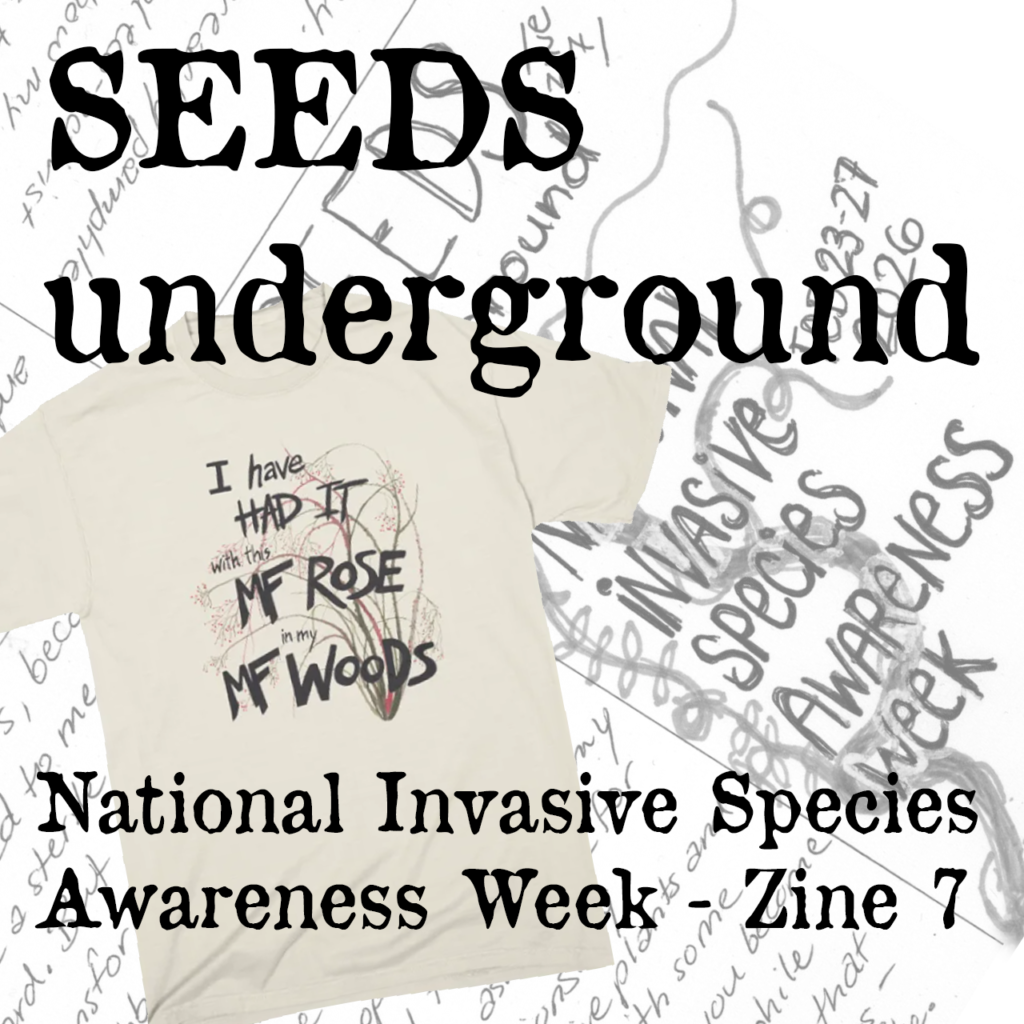
I had to use the acronym because National Invasive Species Awareness Week attached to the end of the zine title is way too long.
If there’s any topic surrounding native gardening that I’m most passionate about, other than the native plants themselves, it’s invasive species. I will gladly die on this hill, repeatedly. I expect to hear all of the invasive species denialists to come crawling out of the woodwork and…
If you have never spent a single winter in my shoes fighting blasts of bitter cold trying to eradicate invasive species from one tiny little acre of woodland (and having to do this repeatedly year after year), you can take a seat. I am not interested at all in your armchair theory about whether or not invasive species exist. If you haven’t been out there, putting in the work, you cannot know.
You have no idea what it’s like to have to cut down so many shrubs that the bi-weekly yard waste crew starts skipping your property. You have never had so much of it left that the only thing you can do with it is to carefully construct a dead hedge on the side of the property – one which stretches close to 500 feet at this point. You’ve never fantasized about renting a dumpster, filling it with all these invasive plants, driven it over to the front of the nearest garden center that continues to sell invasive species (because they’re allowed to), and dumping it in front of the door in some grand display of radical activism that would make the likes of PETA weep.
You have no idea how the thought of going to one of your local favorite trails (of which I’m actually wearing their hoodie right now as I write), brings up feelings of utter despair, because you know, that this year, there’s a chance that none of the native species that had been their previous years, remain. There was a tiny patch of bluebells left a few years ago, surrounded by lesser celandine. Singular cardinal flowers bloomed, sporadically, among the wineberries. You’ve never felt pressured to adjust course, get over your fears of the use of herbicides, because damned if you do damned if you don’t, there won’t be anything left. You spent the better half of a decade trying to take them out “the right way,” only to realize it’s one step forward two steps back each year. You cannot fight these infestations back without poison. I will never get that time back.
You also wouldn’t understand the joy of watching how quickly a habitat will bounce back when you do manage to eradicate the invasive species in an area. The part of my property that was once covered in Ficaria verna that I had to spray to kill (digging didn’t do anything, they kept spreading faster than I could dig) is now a field of Claytonia virginica in spring. An area that was once filled with multiflora rose, buckthorn, burning bush, winter creeper and japanese honeysuckle now hosts wild native patches of bloodroot and wood anemone. I had no idea these were here. They had enough energy stored in their roots to survive, but who knows how much longer they would’ve lasted in their fight against invaders.
Every space cleared has a chance to be reawakened. There are native species in the seed bank, their roots beneath the soil, just waiting to be freed. These are the plants that are meant to be here, which evolved here, which existed before the bullies moved in and took over. You can’t tell me that invasive species aren’t real, because I’ve seen the damage happen in real time, and I’ve witnessed the recovery. The plants that bounced back – these didn’t need to be seeded in. They were already present, not as seeds, but as suppressed root systems beneath the soil. The land wasn’t degraded. There wasn’t a recent disturbance. Attacked on all fronts, the number of invasive species overpowered them. All they need are people who are willing to put on their winter gear and gloves and get to work to rip them out.
The spaces I’ve cleared have remained cleared, for now. There are many properties like mine. I get that we have many other problems going on right now that need attention, but we are limited in what we can do about them, and there’s always something. And when there isn’t? Who wants to go outside when it’s cold and each gust of wind hits you in a way that leaves you cursing under your breath? Who wants to finish off the day picking out multiflora thorns from their skin with tweezers where they managed to pierce one’s clothes? Most people don’t. Hell, I didn’t want to, but the problem had reached a point which I could no longer ignore. I’d much rather be sitting indoors and working on my art, or playing video games, or reading through seed catalogs and planning out elaborate gardens.
If not us, then who? No, it’s not my fault these invasive species are here, but this land is my responsibility. The land, period, is our responsibility, period, as long as we are alive and able-bodied and capable of doing something to take care of it.
This is a battle that is fought on many fronts. The reason many invasive species are not regulated yet is because there’s far too much pushback from the horticultural industry and landscapers that are unwilling to be proactive – they make money off selling them and any attempt at regulation is met with outrage at harming their cash crop. When isn’t greed the source of the problem? The only way to fight this is to promote native gardening, and do so in a way that makes it beautiful and desirable. I don’t just mean meadows, because that’s not beautiful to everyone (even if it is to us), and no amount of shaming and namecalling will win them over. You catch more flies with honey than vinegar.
We need people on all fronts – gardeners who are willing to experiment and maybe kill a few plants in the process to figure out what looks good and works in a design. People who are good at growing native plants of all kinds. People who are really good at marketing and amplifying the message. That includes negative messaging – even if you know what it is, post photos of invasive plants (even weedy exotics) on plant ID groups and ask “What is this weed that keeps trying to take over my garden?” If we cannot convince people that invasive species are a problem, then we can make them irrelevant in the industry. We need to change public perception. It can’t just be about the birds and the bugs. You have to seek to understand why other people garden the way they do, and speak on their level. You need to step out of the echo chamber of gardening for “the right reasons” and learn how to speak horticulture. Ecological horticulture exists, but we need to talk about natives in formal gardens, natives in urban design, natives in floriculture and hanging baskets and ornamental planters. We need to “find and replace” exotic species with native ones – and that means making peace with near-natives and some cultivars where it makes sense to do so. We’ve got meadows covered. Time to come for the hostas and fancy garden parties.
We also need educators on board who teach local botany at least 50-70% more than they cover plants in faraway lands. Why do kids know more about the habitats and ecosystems of faraway continents but couldn’t tell you a single thing about the plants in their own back yards? Even inner cities have urban ecology – this is accessible to everyone. Teach them how to make an herbarium voucher. What if a class made an effort to make vouchers of the plants present on school property? What if an inner city class made vouchers of the plants growing in the sidewalk cracks? Don’t just focus on the parts of the plant with coloring pages, dissect one and show them. Instead of growing beans, sow native winter annuals, and you can watch the entire process, start to finish, within a school year. Yes, the Amazon Rainforest burning down is a problem, but so is the spread of invasive species in our local parks. Empower them by giving them something they can do to heal the land.
Most of all, we need people who are willing to take time out of their busy schedules, even if it’s to sign up once a month, and join a group that’s focused on removing invasive species. There are two that I’m good friends with in the Philadelphia area, but these exist everywhere.
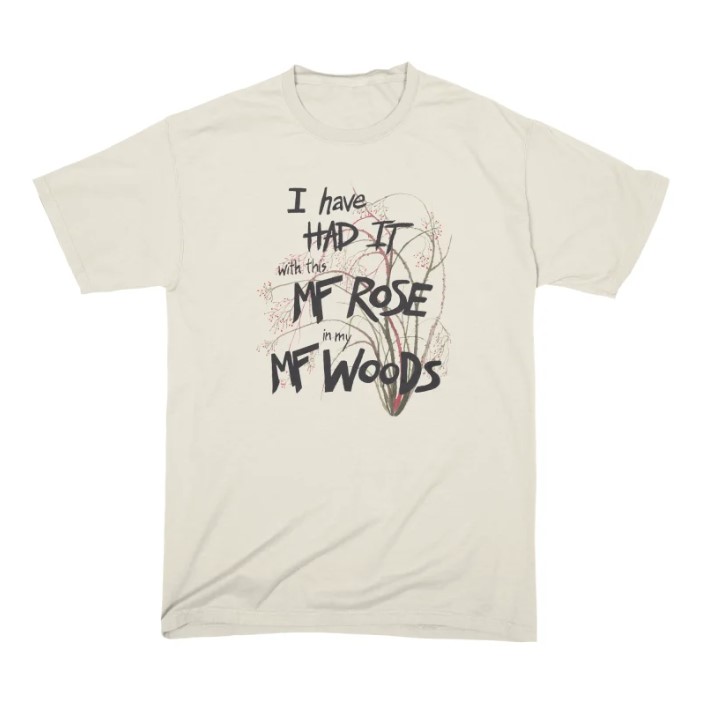
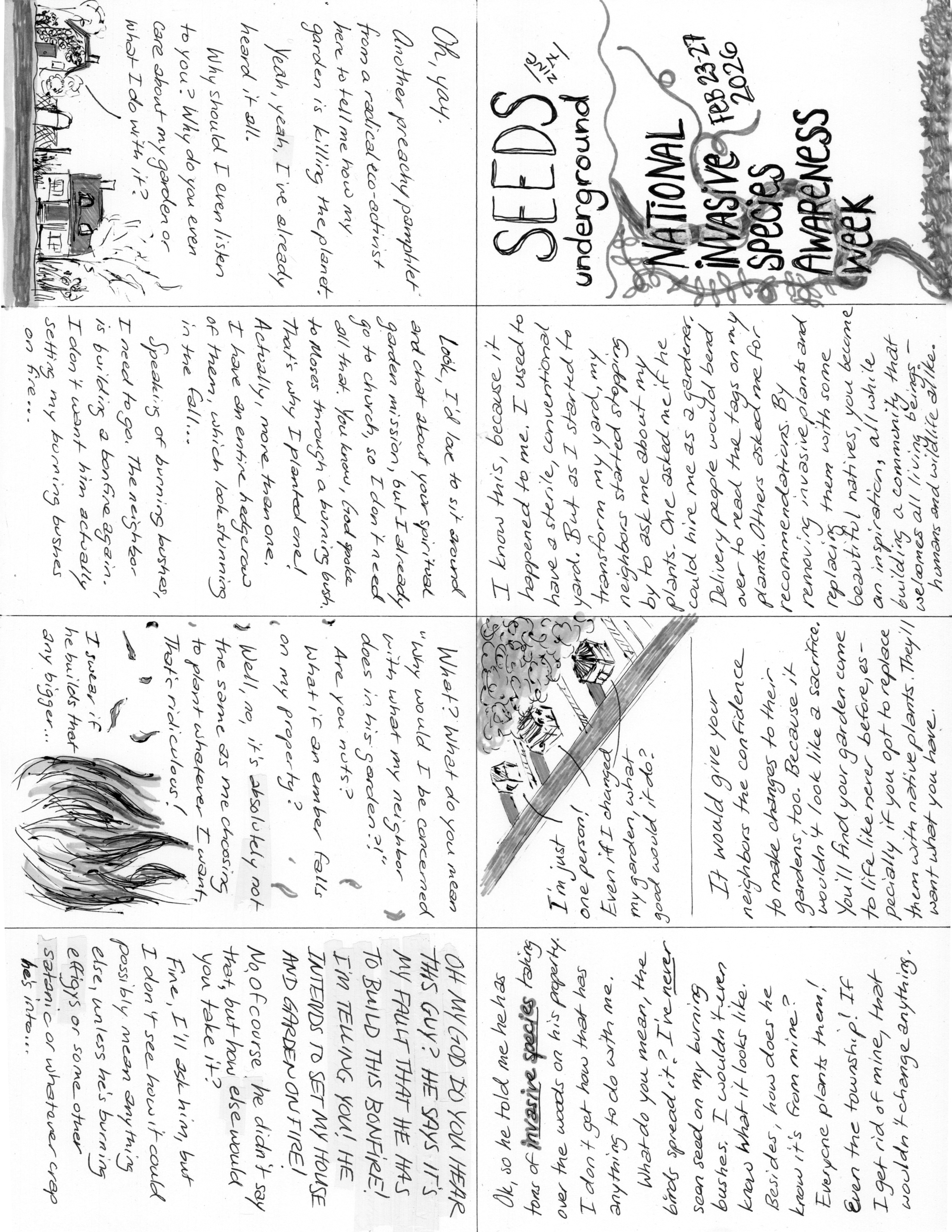
I know this was a long one. Invasive species are the thing that got me learning about native plants and inspired me to focus on native gardening. I had to learn how to identify invasive plants, and in doing so, I also learned how to identify what’s native. So, for National Invasive Species Awareness Week, I did create a zine (which is below). I am also putting out several designs which are real thoughts I’d had while out there in the thick of it – or the thicket, really. The first one I created was this, inspired by Samuel L. Jackson’s quote from Snakes On A Plane. Admittedly, I haven’t seen the movie, but I’ve seen the clip of him saying this, and so it’s been stuck in my head ever since. MF is also an acronym for multiflora, so it ends up being a double entendre here. Follow me on my socials (themagikgarden on Facebook and Bluesky, magikgardenpa on Instagram and Threads) to know when I have the next designs posted. You can also bookmark my Threadless shop and check back periodically to see what’s new.
PDF link to the zine is here. Video instructing how to fold this type of zine is here. You can also save the image below. Print full, trim the margins, then do the foldy thing for your own little pocket story about invasive plants.