

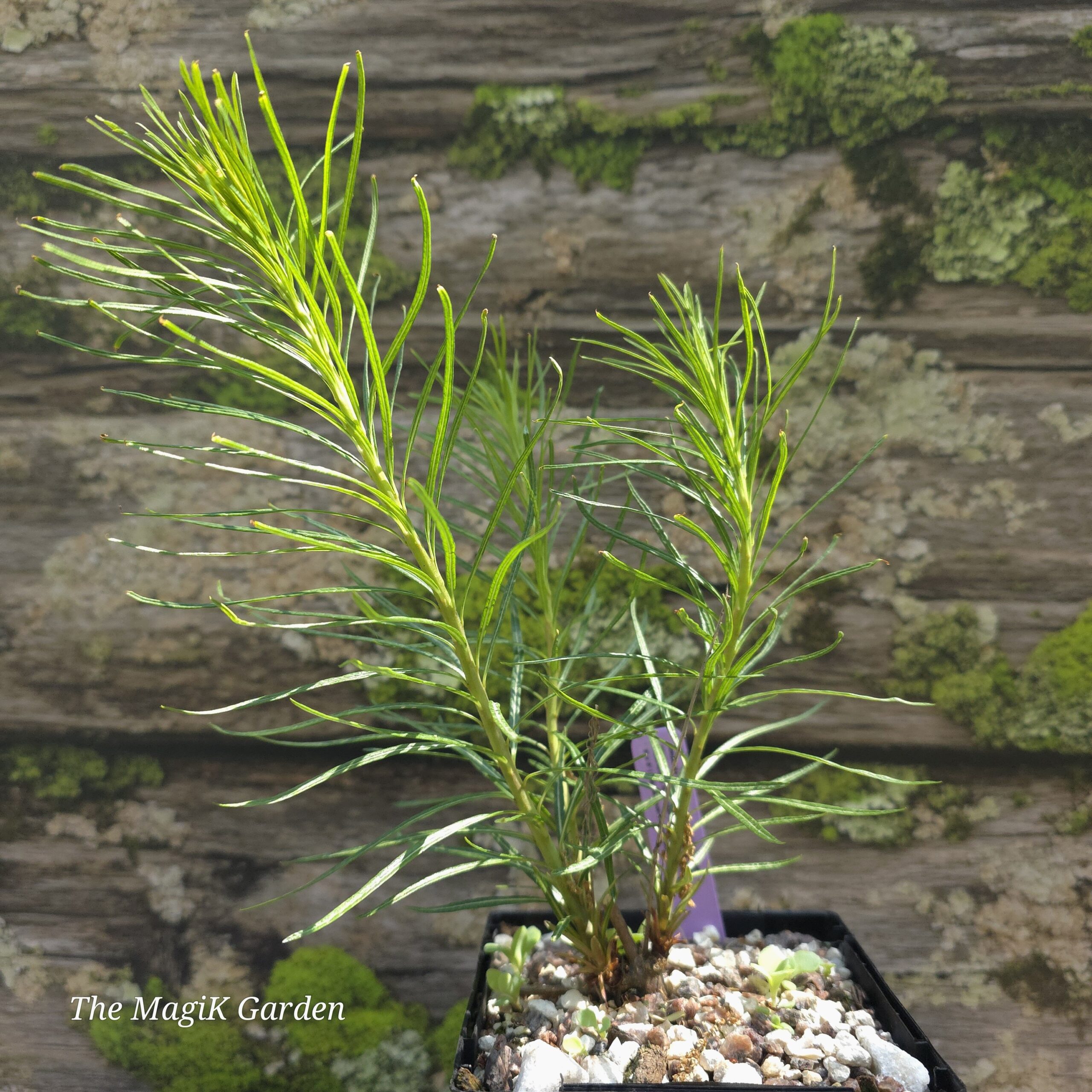
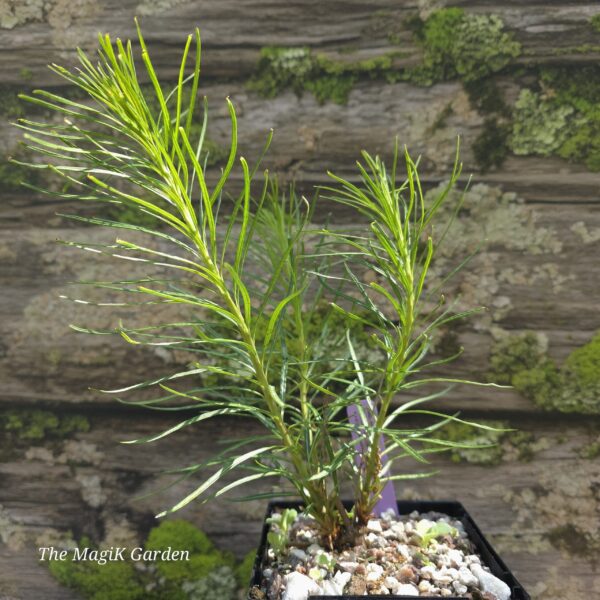
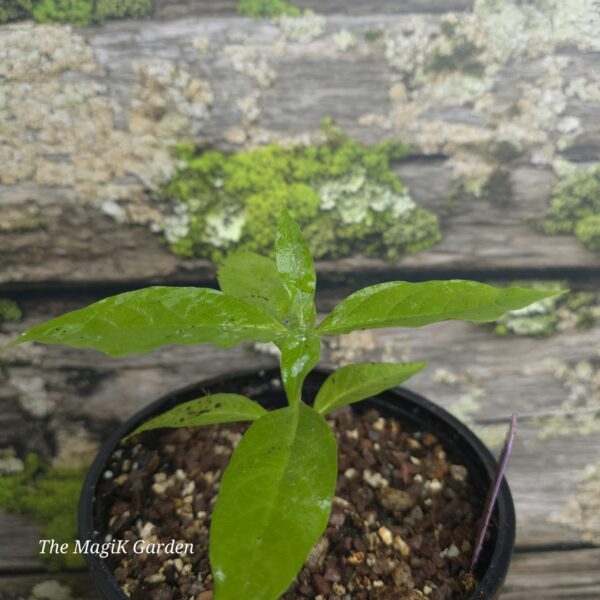
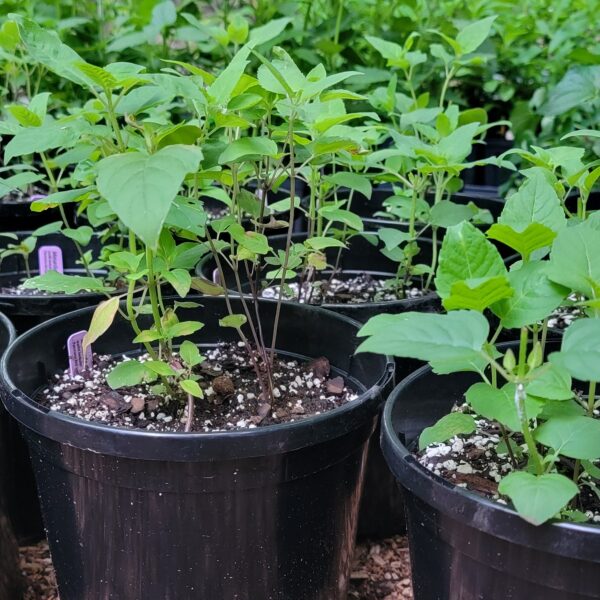
These were grown from seed I collected from Jenkins Arboretum when I was a horticulture intern there in 2024. Amsonias like to hybridize, and they have quite a few species. These look to be Amsonia hubrichtii based on the leaves, but they are open pollinated, so it’s probably a mix.
It doesn’t really matter for us, as there are no Amsonias native to PA (Amsonia tabernaemontana would be the closest near-native). They still benefit habitat and have a beautiful, mounding habit with feathery soft leaves that turn golden in the fall. In spring, mature shrubs boast blue flowers, hence the common name bluestar. If you are aiming for horticultural interest with native and near-native plants, or are trying to convince a loved one that not all native look like weeds, this is a sure bet and a great compromise.
These are very easy-going shrubs that reach 3ftx3ft and tolerate most garden conditions. Since they are in the dogbane family, deer tend to avoid these (they haven’t sampled mine yet, your deer may vary).
Bonus plants included! Hylotelephium telephioides, which is native and rare in PA, seeded into most of my Amsonia pots, since they were kept close together. I left the pups in place. If you buy one, you get two plants for one price. Feel free to pot them up and grow them out, and share some with friends. These are the only US native Hylotelephium – most people are familiar with the Asian cultivar known as Autumn Joy. They should also be popular with your average native-hesitant gardener. Just be aware that unlike Amsonia, herbivores do like to sample these, so you will want to protect them. For more info on those, check their listing in the shop.






Reviews
There are no reviews yet.