


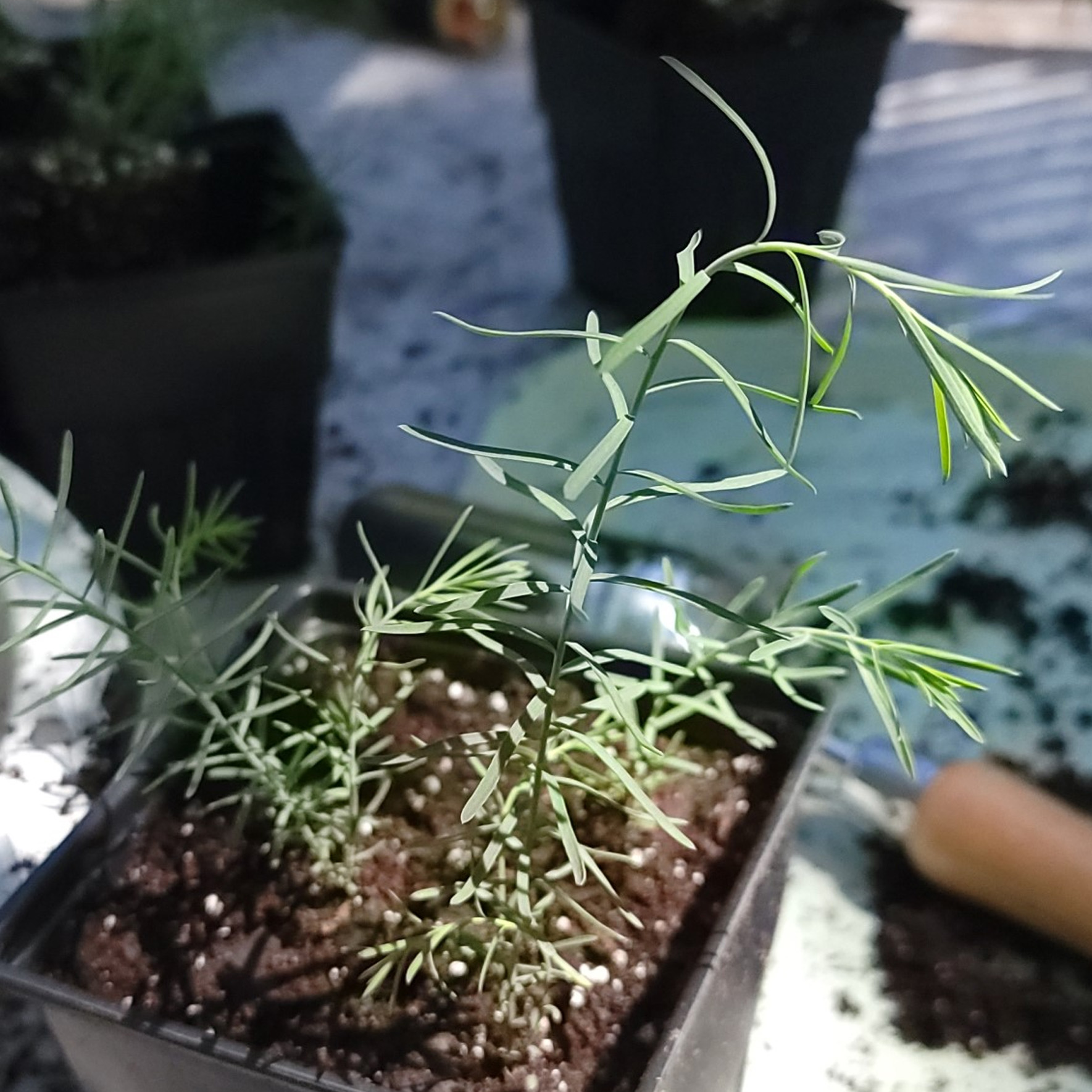
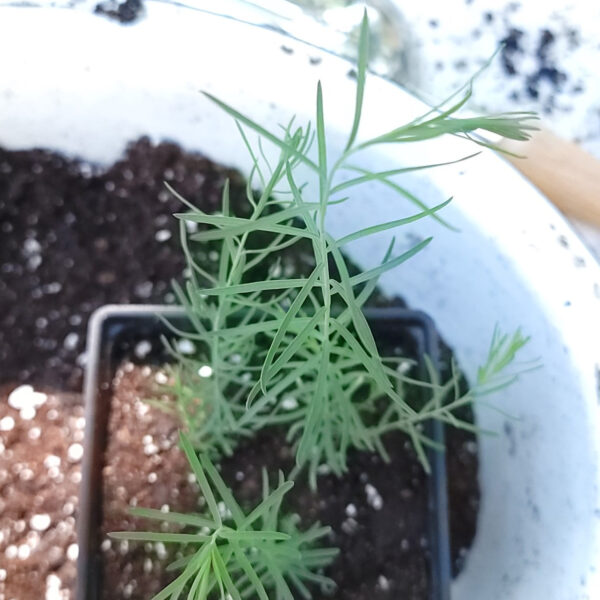
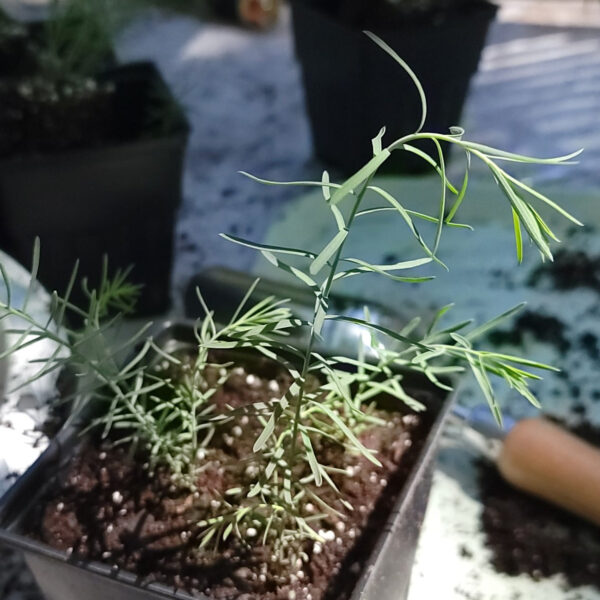

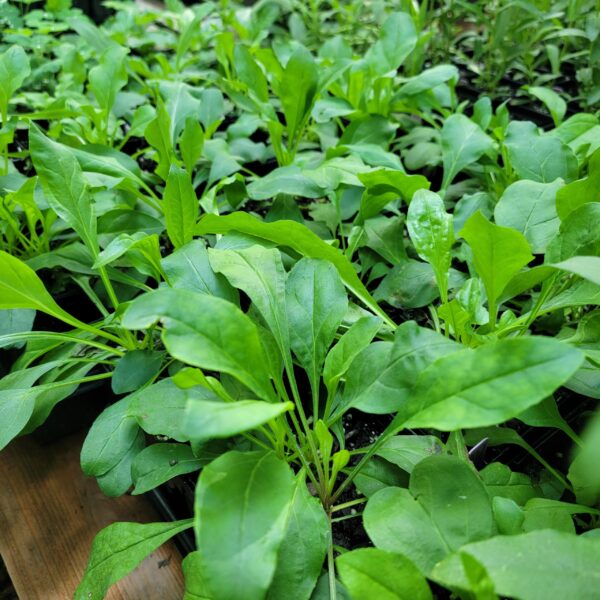
These are sold in true quart pots with three plants per pot. Split them up to spread in your garden or plant closer together for a mass planting effect.
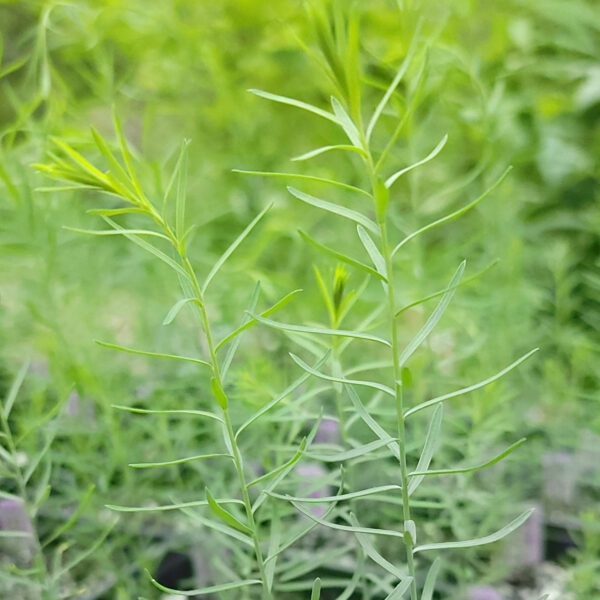
This is one of those flowering plants that really don’t need flowers to stand out in the garden. The airy, delicate, blue-green leaves are somewhat reminiscent of Amsonia hubrichtii, but this will remain significantly smaller. If you have any spots in your perennial flowerbed that need textural variety, try popping this one in.
This particular species is near-native, found growing in prairies further west, with a separate population in West Virginia. There are flaxes native in our area as well, which bloom yellow, some of which are annuals. What makes this perennial especially attractive, other than the fine-textured foliage, are the cornflower blue flowers. Despite the fact that this is not native to our area, this is not known to be an aggressive spreader. It’s popular in cultivation outside its range similar to other near-natives like Amsonia hubrichtii and Agastache foeniculum.
Plant this one in a “dry garden” (for drought tolerant plants that do not need to be watered) or a rock garden in full sun. It can handle more moisture but will flop as a result. It may take two to three years before you see your first flowers. After that, it will self-seed easily. Deadhead or collect the seed, which can be eaten if cooked, to prevent it from re-seeding. That being said, you may want to allow it to seed in a little, since it’s a short-lived perennial.
I have read that some have tried to work with this plant to create flax for fiber crafts. As is often the case, the wild native varieties will be more challenging to work with than those cultivated for thousands of years. Cultivated fiber flax has traits which make processing easier and produces longer, stronger fiber. That being said, this is definitely something I plan to explore with this. This is just one of many native plants that have bast fibers for cloth.
Linum lewisii is virtually indistinguishable from the Eurasian Linum perenne without a close examination of the flowers. This plant is heat tolerant, but flowers may close up during the hottest part of the day. Most visits by pollinators are reported to happen early in the day. Primarily visited by pollen-feeding muscoid flies and halictid bees. Flies are required for pollination – hand pollination is ineffective.





Reviews
There are no reviews yet.