

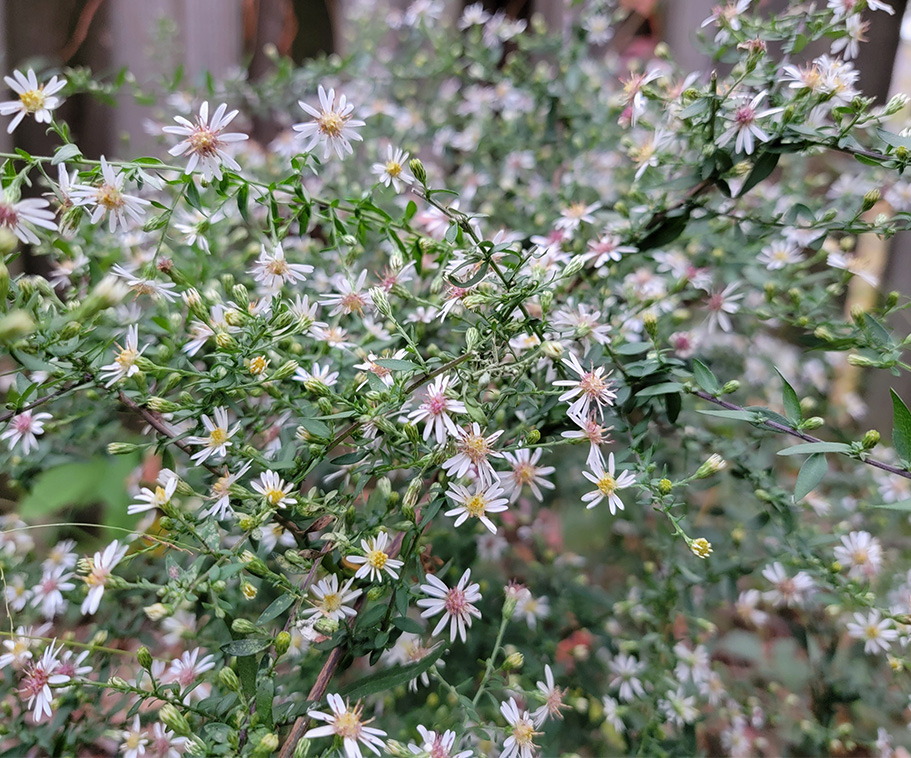
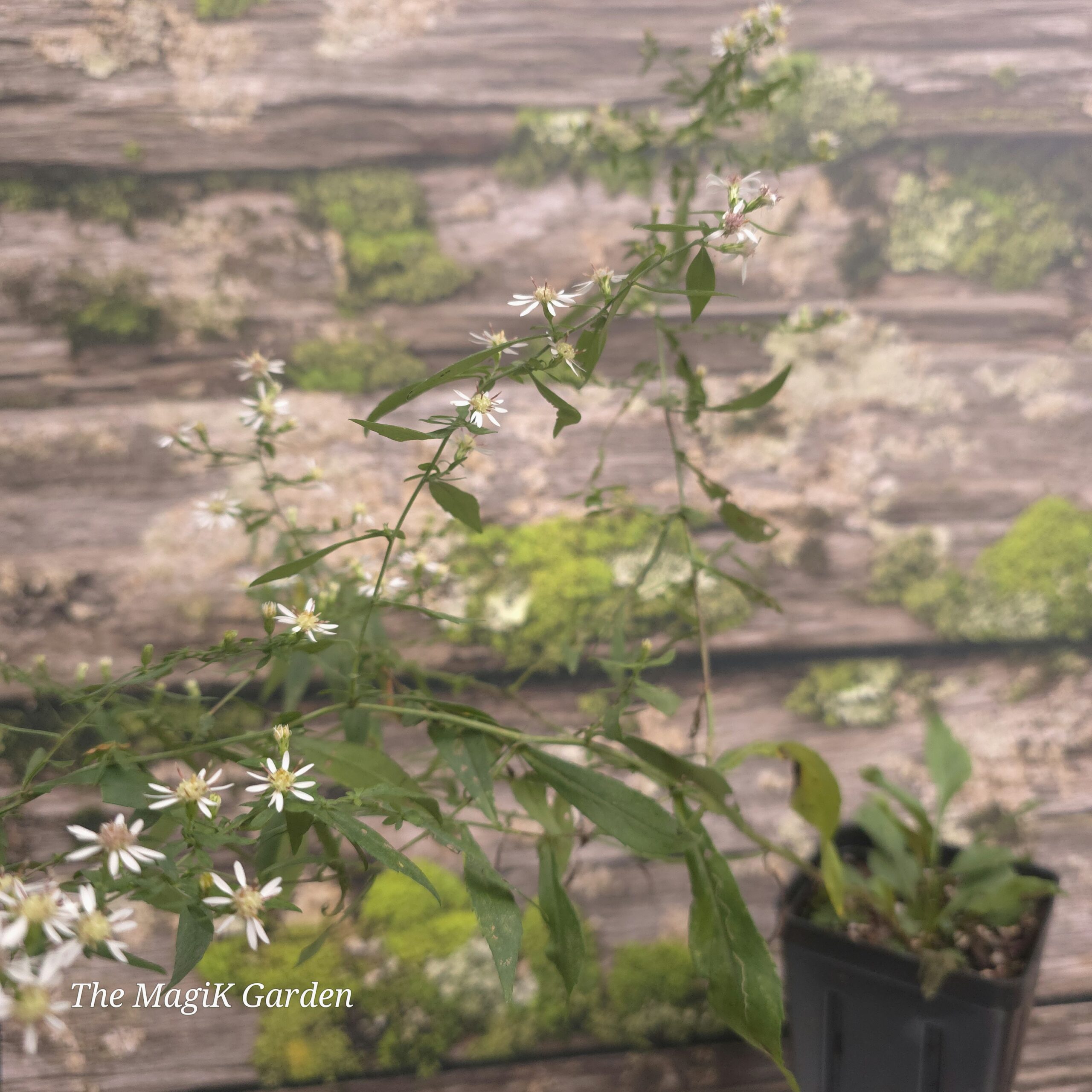
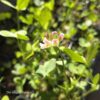

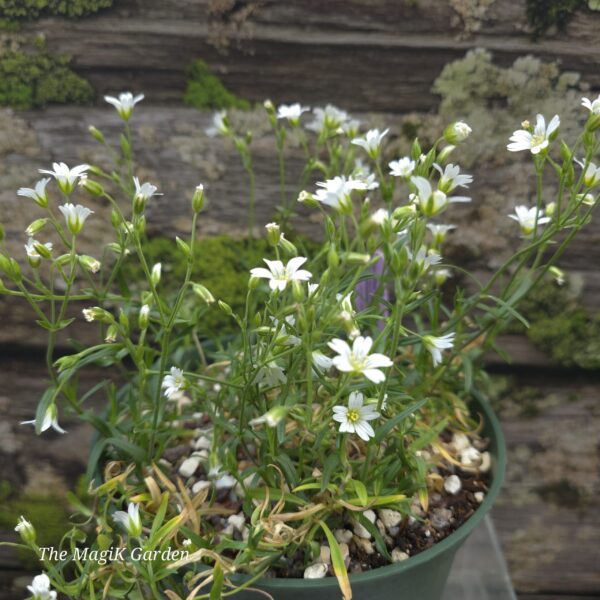
These grow wild on my property in Blue Bell, PA, though for the longest time I didn’t realize what it was. The ones which grow in in shade in the woods remain very short and sparse, less than a foot tall, though they do, in fact, bloom. I knew they were some form of “small white asters,” a term used since Symphyotrichum is a pain to key out at times, but that’s it. The habit was throwing me off. It was only after I transplanted one of these out of the woods into a part sun location (much brighter, but no direct sun), on the northern side of a fence, that it grew into a beautiful 2ft mounding plant covered in blooms. That’s the one that’s featured in the main photo here.
There are a few other white asters in the area, but they’re far less common. Did I mention that Symphyotrichum is also known to hybridize with one another on occasion?
For all intents and purposes, treat this like your standard calico aster. Once I’m able to properly key it out, I’ll update the information here. The exact species doesn’t really matter, other than it is a beautiful native wild small-flowered aster with as local an ecotype as it gets.
Other things worth noting about these calicos, they can handle seasonal ponding – as they do appear to be the most abundant in the wettest part of the woods, but they can also handle drought. If you’re looking for something that’s a local ecotype, can grow in shade, blooms in September, and can do well in a rain garden but also handle drought, give this one a try.




Reviews
There are no reviews yet.