

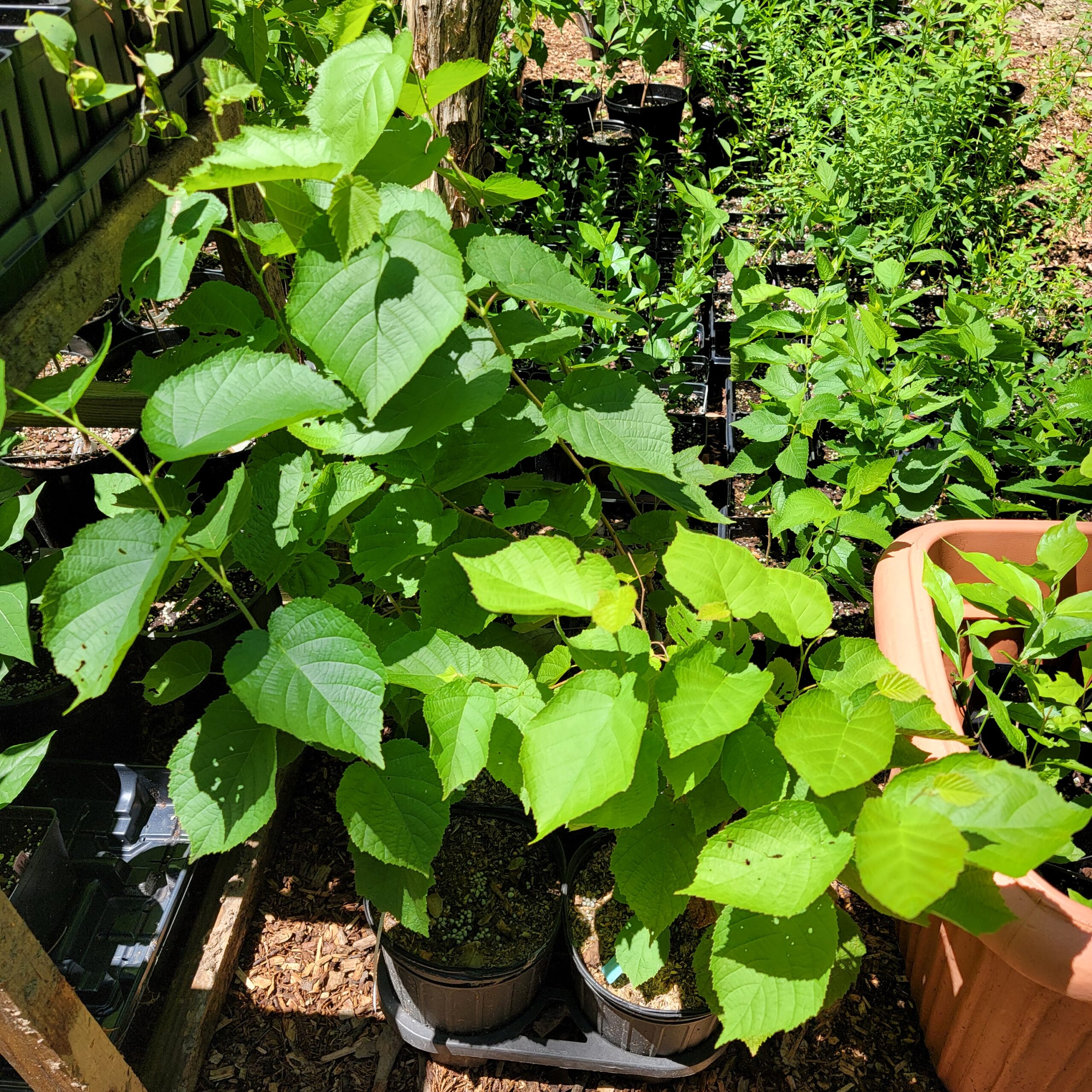
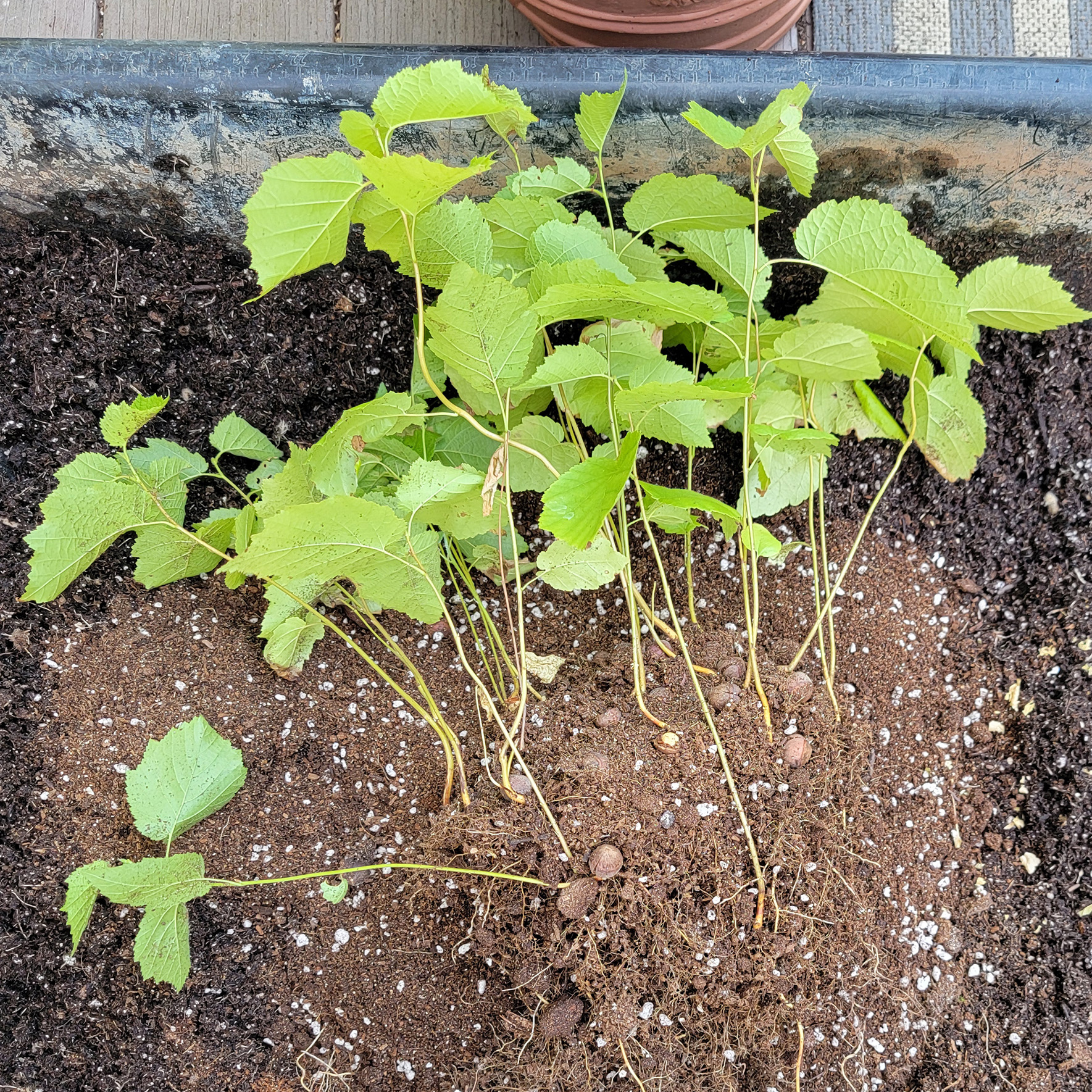



Corylus americana, the American hazelnut, is one of two species of hazel native to the North American continent. This species of hazel is native and widespread east of the Rocky Mountains.
Hazelnuts are the true first flowers in late winter
The American hazelnut is one of the earliest blooming trees, producing catkins that dangle like golden icicles in late winter. These wind-pollinated shrubs are not self-compatible. If you wish to produce nuts, you need to plant two genetically different shrubs next to one another. You can plant them as close as 1-2ft from one another. Try planting them in an allée: shape them into a tree form by removing suckers and lower branches.
These hazelnuts are edible!
Corylus americana produces choice edible nuts, which taste similar though are smaller than the ones produced by their European cousins. They are resistant to the North American fungal pathogen Cryptosporella anomala which is known to plague the European hazels. Most commercially available hazelnuts are Euro/American hybrids for combined larger nuts and disease resistance. Some people, including American indigenous tribes, utilize the American hazelnut as an herbal/medicinal remedy for a number of ailments.
The hazels are highly prized by wildlife, so if you wish to have a chance of enjoying any yourself, plan accordingly. The nuts are edible raw off the plant once ripe in fall, and can be picked when the husks are still green. This is also a keystone species, known to support at least 108 species of caterpillars. This doesn’t attract pollinators, since these shrubs flower in winter and are wind-pollinated. That being said, if there are any active insects at time of flowering, they sometimes may utilize the pollen as a food source.
Where to grow filberts
The American hazelnut adapts well to a variety of site conditions but reportedly does best on well-drained loamy soil. In my woods, they do grow wild in a woodland opening in clay and alluvial soil that experiences seasonal ponding. While their clump is tall, thin and lanky, they still produced a sufficient number of catkins (in the photo). Since I think this is a single, wild species, I’ve never seen it fruit.
I’ve also seen them utilized in riparian buffer plantings, making them a good option for an eco-conscious agroforestry production. For the ones I specifically grew from seed, I collected the nuts while attending an agroforestry workshop in York, PA. The additional shrubs I acquired, expecting my own to sell out before my own are old enough to fruit, are seed-grown in Indiana.
Lay a hazelnut hedge
These are shrubs that can be coppiced, pollarded, pruned, and will grow into a tight clumping thicket over time. Coppicing and pollarding are a sustainable way to grow wood for use as firewood and a wide variety of crafts like green woodworking. The European hazelnut is widely used as one of the trees to grow a living hedge. If you’d like to grow and lay a living hedge, this video is my favorite on the topic. You can also use the wood to build hazel wattle fencing, or build portable hazel hurdles to use as temporary fencing.
How to get more hazels out of your hazelnuts
As long as you start out with two genetically different hazelnuts, you can collect the nuts to grow more of them from seed. They are very easy and quick to grow, and under ideal conditions may produce their first crop in three years. Once you have a mature stand, the easiest way to propagate many of them is by cultivating a stool bed. This way you don’t need to wait until they mature to produce more nuts. Rooted suckers from a mature plant will begin reproducing far sooner. By coppicing your hazelnuts, you’ll also increase the number of suckers it produces for more nuts.
Will the deer eat them?
Deer do not browse mine, but these are a known food source. As with any native plants, your deer may vary. I would consider these herbivory-tolerant due to their suckering nature – even if they manage to damage part of the clump due to browsing or buck rub, this only encourages additional growth, especially in ideal conditions.
I recommend protecting them behind a cage for the first few years until they start putting out additional suckers, or utilizing a deer-deterrent spray to protect them while they become established and put on more growth out of reach. You can also propagate them from these suckers, remembering to plant alongside a sucker from another genetically different species for greater nut production.
Disclaimer – always use caution when trying any new foods, especially when it comes to potential or existing related allergens. Any information regarding edibility or medicinal use is for educational/informational purposes only.





Reviews
There are no reviews yet.