
Garden Journal Week 29, 2026
Certified Pesticide Application Exams, Wildfire Smoke, IPM
And Now For Something Completely Different…
My plans for this week were meant to be the usual, aside from the exams I’d scheduled on Tuesday morning. If you haven’t been following my Garden Journal posts, the usual involves a mix of nursery tasks as well as gardening tasks. While I did manage to get a little bit of nursery and garden work done, it would seem that nature had other plans.
Monday through Wednesday were typical. I check my emails, check social media posts, read and respond to messages and comments while having some tea, maybe work on printing out some more tags for the nursery, then head outdoors. The tags take a long time to print, but at least once they’re done—providing you’re using a proper Brother printer and not some cheap knockoff from TEMU like I did starting out—I shouldn’t need to redo them. The other benefit of using a Brother printer that hooks up to my PC is that I can save all the labels I’d done, so it takes less time to print out any extra I might need. Thursday onwards, I was stuck indoors due to the abnormally high AQI from Canada’s wildfires. Sunday was the first clear day after the thunderstorms that came through Saturday afternoon and evening.
A few customers stopped by to pick up their orders early last week, as well as a fellow member from the Ambler-Keystone Farm & Garden branch I belong to with her son’s partner who is interested in entering the green industry with a focus on native gardening. I’ve met quite a few people now who are where I was just a few years prior. Each new one I meet leaves me feeling more hopeful for the future, and less alone in my own path to save what’s left before it’s gone forever.
Of course, I’m always eager to give a tour of the woodland, especially to showcase my several-hundred-foot-long dead-hedge built from the carcasses of invasive species I removed from the property. Nothing leaves an impression of just how out of control invasive species have become than explaining how the yard-waste removal crew started skipping my house and the need to come up with something to do with it.
That—combined with the juxtaposition of my stewarded woodland compared to my neighbor’s unmanaged woodland still full of invasives—really helps to drive the point home that our area has reached a critical state. After all, my woodlot only spans an acre. An acre seems like a lot, but compared to the amount of greenspace in our wild habitats and the very tiny, underfunded crews responsible for managing them, it may as well be a postage stamp.
We really need all hands on deck.
All this brings me to the biggest event of the week: taking, and passing, my certified pesticide applicator exams to officially become a certified commercial pesticide applicator. Pesticide, of course, is an umbrella term referring to any chemicals used to manage any type of pest. A pest can include any living organism that causes harm to humans, agriculture, livestock, commodities or ecosystem. Pesticide applicators range from exterminators, to deer repellant applicators, to weed removal, to swimming pool treatment, and even pressure-treating wood. My interest is specifically in the removal of invasive species.
Integrated Pest Management
Public perception on pest control is both something that the Department of Agriculture is extremely sensitive to, and that I’ve personally noticed is so incredibly misinformed these days. The amount of time I’ve spent—wasted or not—in my attempts to correct and educate the public on the topics of pest control is time that I’ll never get back.
At some point I will likely write more blog posts on the topics of pesticides, pest control and the like, but the most important thing to note is watch out for appeal-to-nature logical fallacies in marketing. A great example of this is the synthetics vs organics debate. Organophosphates are organically derived and among some of the most toxic chemicals known to mankind. So is cyanide. The chemical in marigolds that’s responsible for repelling pests is Limonene – the same stuff you get in a bottle of orange oil. It’s also effective as a burndown herbicide in high concentrations, because it’s a toxin. I love to clean with D-Limonene. I have also seen it work as a solvent on certain types of plastics. Either way, there’s no such thing as a safe pesticide. That phrase, “safe pesticide” is an oxymoron.
On Tuesday, I took the first steps to become certified as a Commercial Pesticide Applicator. I registered for both the core exam—which is required of all pesticide applicators regardless of level—as well as the exam for Category 10: Right-of-Way & Weeds. This is just the start. I have at least four-five more categories that I want to have under my belt to have all the possible scenarios covered. I chose that category to start because it’s the least additional info that I needed to memorize, and the core material is pretty intense.
I get extremely anxious when it comes to taking tests, even if I know the material. ADHD and test-taking don’t tend to go well. I know the material, especially the technical stuff, but the moment I get put on the spot and forced to recall anything, I freeze. Knowing now what to expect, I’m feeling much more confident about getting the other categories knocked out in quick succession.
The thing is, even though I am now officially certified to apply pesticides on other people’s properties, I still need to take the steps to register The MagiK Garden as a licensed pesticide business. The other thing worth noting is that all the materials heavily stress the importance of utilizing chemicals as a last resort. It should never be the first thing you reach for unless you know that there is no feasible alternative given the situation. Spending ten years trying to remove weeds manually, even setting them on fire with a torch, was probably a bit longer than I needed to spend before realizing that I should really just learn how to safely and carefully apply the correct herbicides.
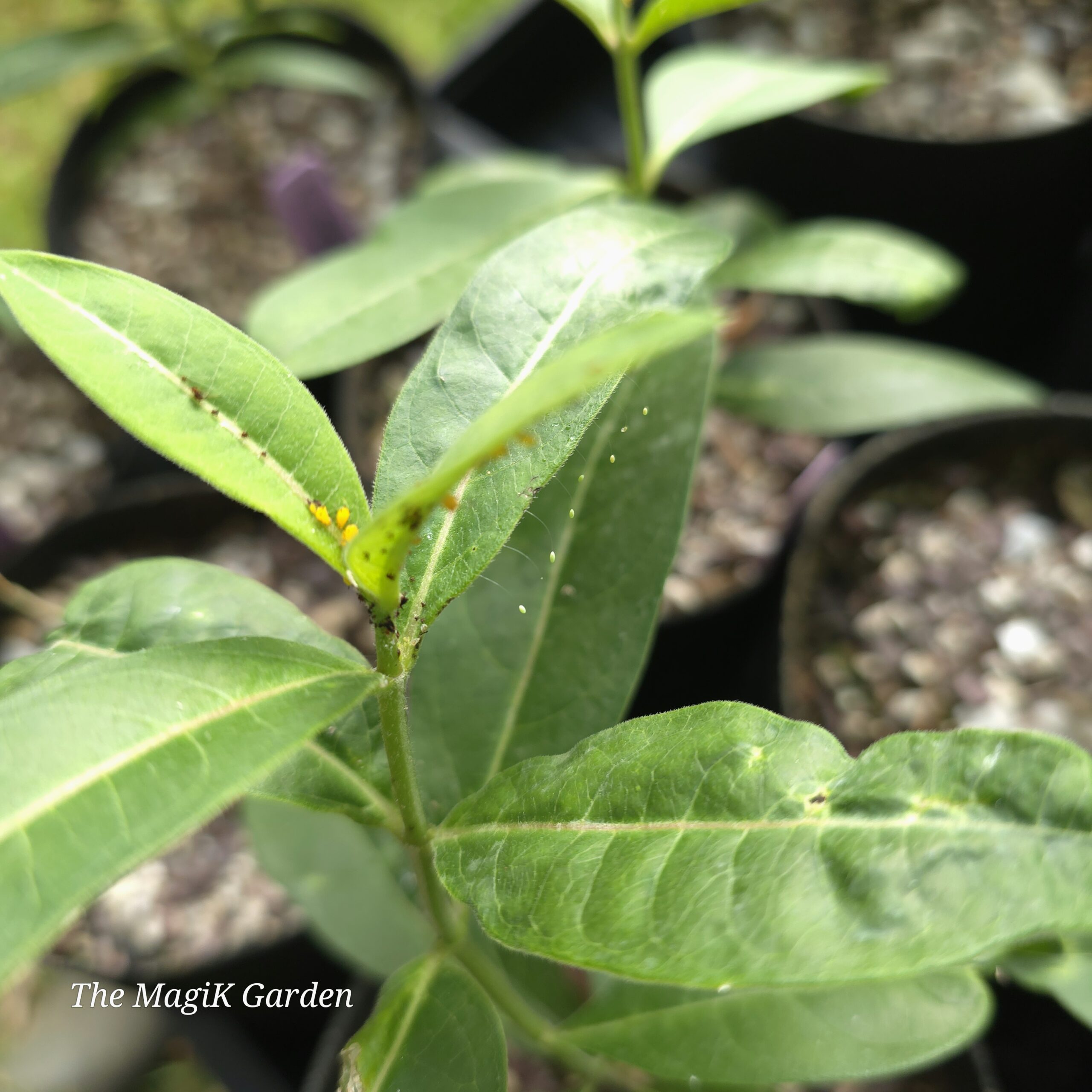
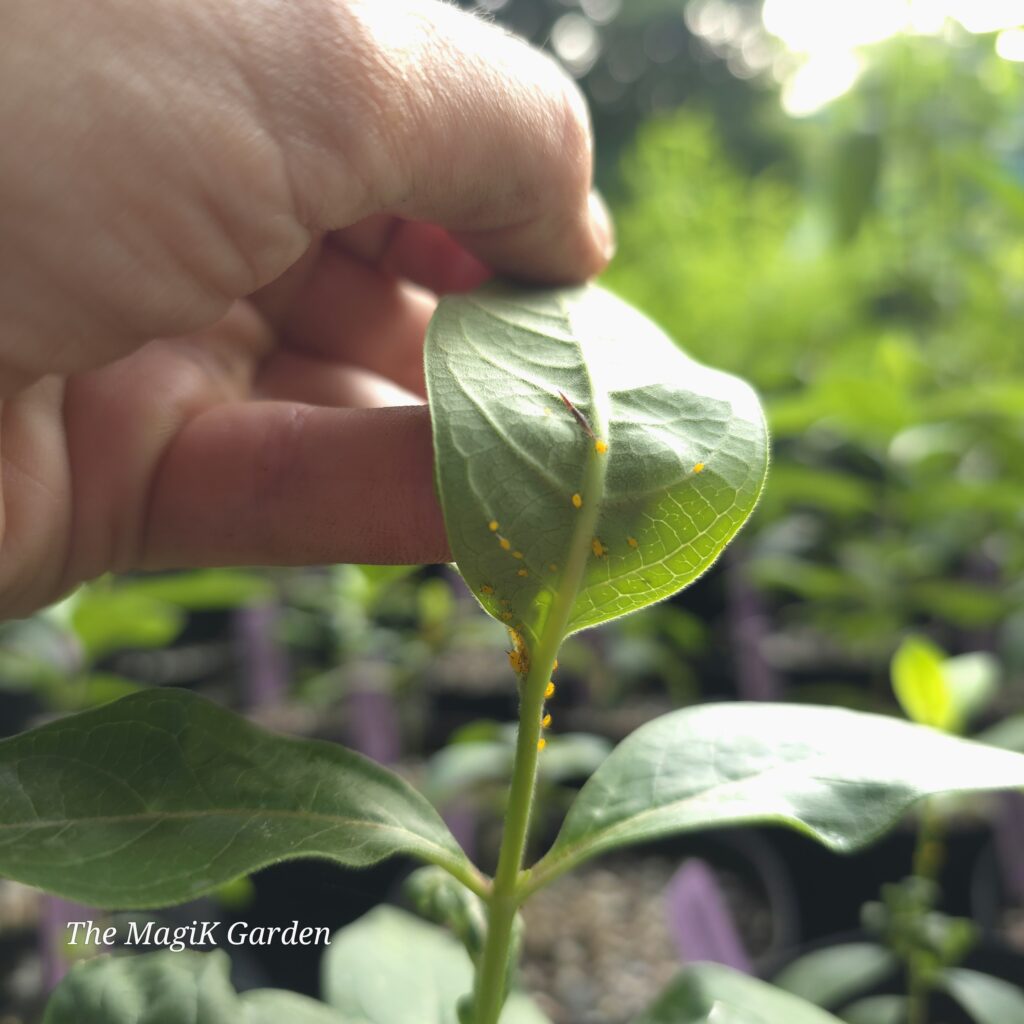
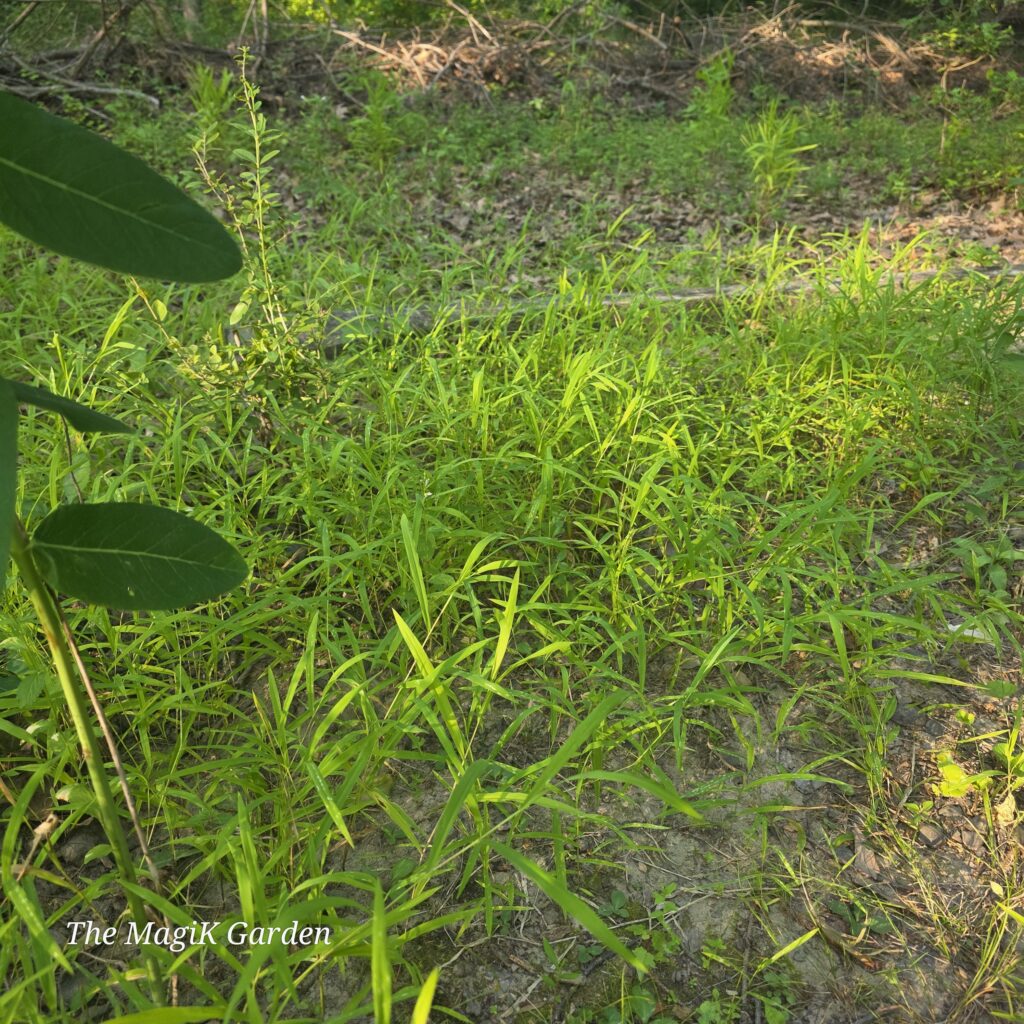
Most of us are already practicing what is taught as the proper management technique known as IPM or IVM. IPM stands for integrated pest management (IVM is the same, but replace pest with vegetation). Biological control methods such as attracting and trusting beneficial predatory insects to handle pest problems, like the lacewing photographs above, are recommended long before one decides to pick up an insecticide. Likewise, mechanical control like pulling or mowing, or cultural control such as planting desirable (ideally native) plants to outcompete an invasive species is far better than reaching for an herbicide. An example is shown to the right, where whitegrass (Leersia virginica) actively outcompetes its lookalike—Japanese stiltgrass.
So although I will be able and ready to help you deal with the worst of the worst invasive species with carefully timed applications of the least hazardous chemicals at my disposal, my main interest is actually in handing you the reigns in taking back control of your own property.
That’s why one of the next categories I plan to get certified in is Demonstration & Research. I want to teach you what I had learned how to do on my own. You don’t need anything restricted to handle any of it. Often, it’s a multi-pronged approach of all the various methods mentioned above—cultural, mechanical and biological—in addition to chemical. What I really plan to do is help you come up with a tailored IPM prescription.
I’ll make another announcement later on when I have everything set in place and ready to go. The ball’s rolling, so it won’t be much longer. I plan to be helping gardeners and treating properties within a few short months. I will also offer some of these natives that I noticed are effective in invasive species control but, for whatever reason, are not currently sold in the trade. I didn’t plant them. All I did was control and observe what showed up. Since this is a remnant, it doesn’t take much for the natives to step back in. The lessons I’ve learned from nature are far more valuable than words can describe.
Psst… are you looking for what’s in bloom?
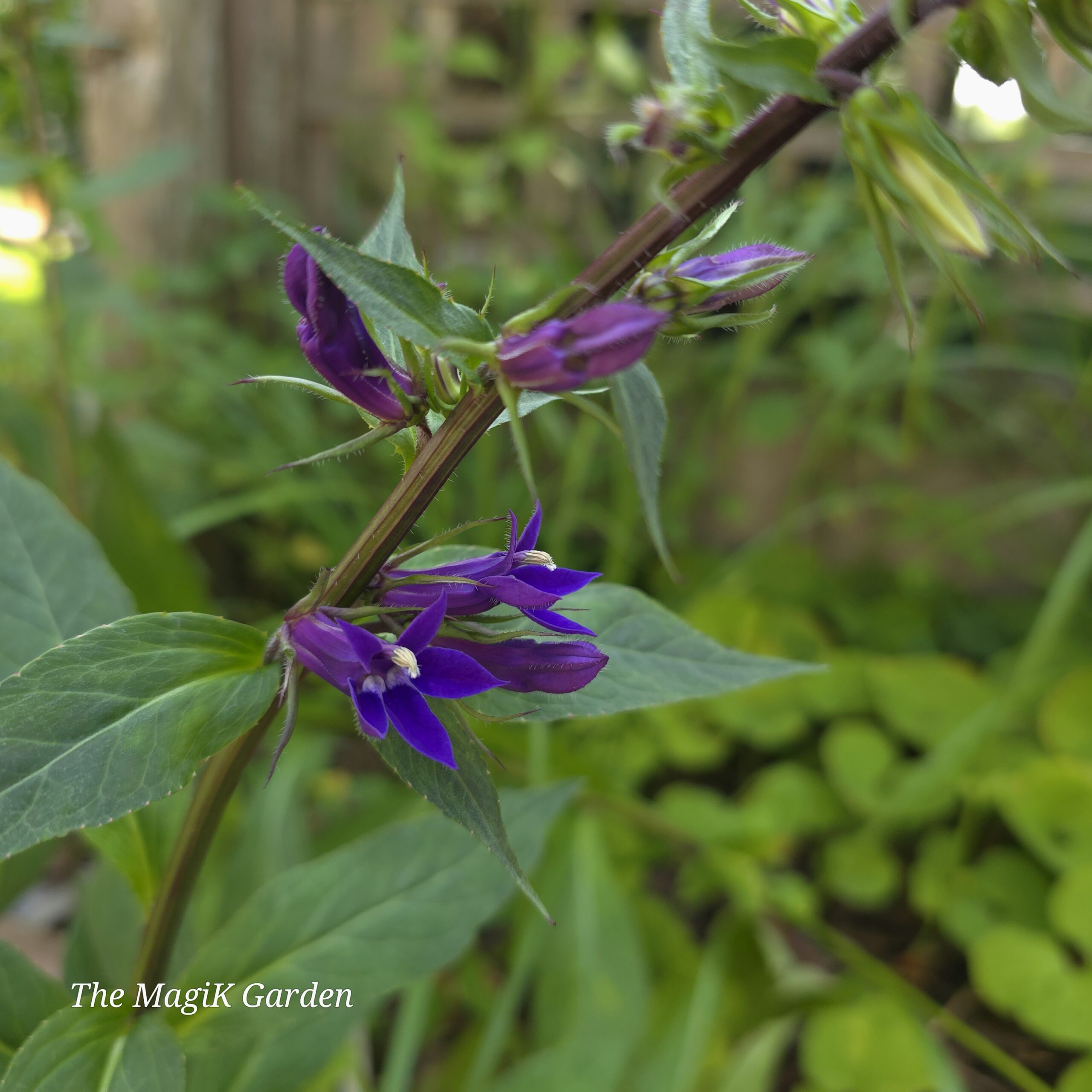
Due to the wild nature of this past week, it was difficult for me to get a good list and set of photos of what’s blooming and what’s done. So, I’ll just share the one to the left.
This is a hybrid cross of Lobelia cardinalis and Lobelia siphilitica known as Lobelia x gerardii or sometimes Lobelia x speciosa depending on the source. Even though it’s a synthetic cross, it still benefits habitat and is absolutely stunning. A more beautiful purple/violet does not exist in my opinion.
I read that it does come true from seed, so we’ll see. I’ll have to test that theory. If so, you know what that means, right?
Here’s a hint.
Are you looking for a native gardening community, but hate social media?
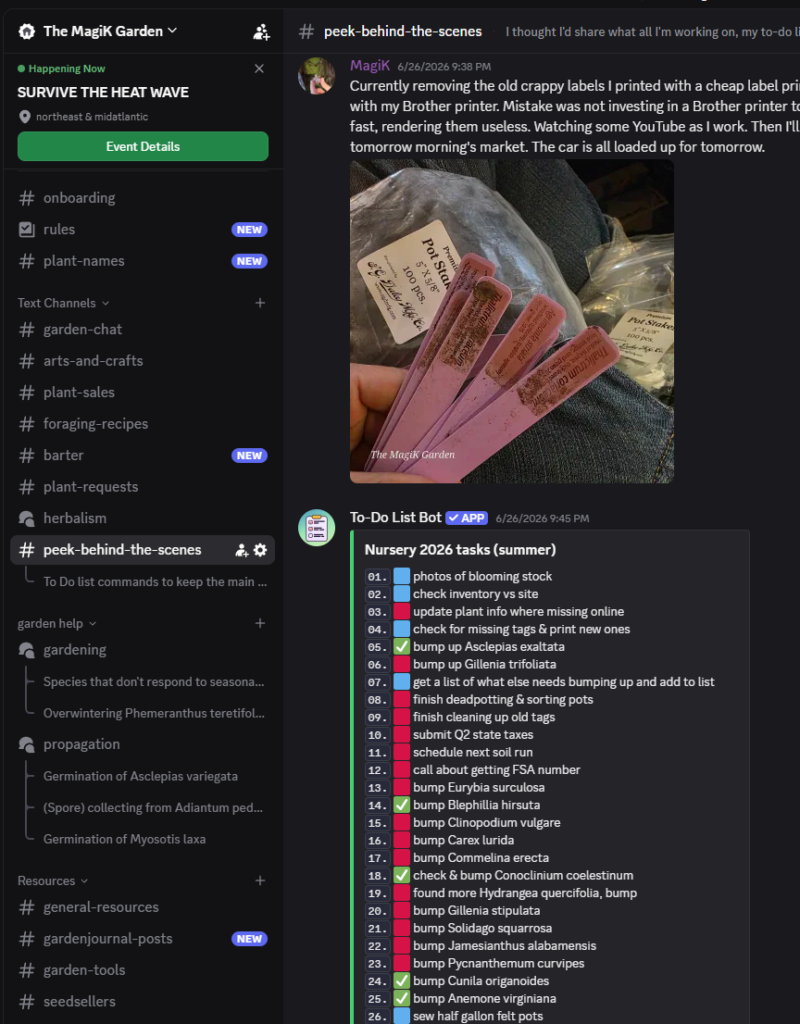
Do you wish there were some way to easily find and access help and resources, away from AI bots, spammy ads, and all the online noise? Have you been trying to connect with other people who are passionate about native gardening, but tired of “yelling into the void?”
Why not try out my newly-launched Discord server? It’s a privately-run (by myself) online space* that serves as both a community chat and an old-fashioned forum.
Best of all, it’s 100% free to join and participate.
New to Discord? Here’s a great guide on how to use it.
*Users are subject to Discord’s TOS when joining.