Garden Journal Week 30, 2026
A Deeper Connection With The Land
FTC Disclosure: Please note that some of the links in this post are affiliate or referral links (full disclosure here), and if you make a purchase or sign up for a service within a certain timeframe after clicking on one of those links, I may earn a small commission paid by the retailer at no extra cost to you. I wouldn’t recommend anything that I don’t or wouldn’t use myself. Thank you for your support!
Wild Plant Culture
Within the native gardening community, there are two main groups of people: the Environmentalists and the Conservationists. This is a philosophical battle which has gone on for well over a century. No, the concept of intentionally gardening with native plants or conservation of land is nothing new. Environmentalists—synonymous with Preservationists—tend to see the world as humans vs nature, in that humans are only ever destructive to the environment and the world would be better off if we’d never evolved. Conservationists see humans as part of the ecosystem, that there’s no such thing as a pristine untouched wilderness because humans co-evolved with it.
To put it simply, either humans are part of nature, or apart from it. Humans leaving their mark is either seen as an intrusion or interference, or it’s part of its natural history.
Do we judge the coevolution of other species as damaging or intrusive? Plants do not desire to be eaten. When an insect hosts on it, it’s great for the insect and food web at large, but not so great for the plant. After all, what gives invasive plants part of their advantage is the fact that nothing eats them…
Do the Environmentalists consider all of the species that evolved thanks to human intervention? Fire-adapted species are the result of thousands of years of fire ecology as practiced by Indigenous populations. Without that intervention, many are imperiled.
I’m sure you’ve figured out by now to which of the two I belong.
“Some of the most diverse and productive landscapes on Earth are now understood to be anthropogenic—significantly modified, created, and maintained by people.”
Jared Rosenbaum, Wild Plant Culture (affiliate)
The Biological Community
“People are often characterized as being part of a community,” Jared writes. “What sometimes goes unremarked is that community arises from interdependency, sometimes dire, inextricable, even unpleasant interdependency.”
As he mentions in the text, we only consider ourselves as being part of the human community. Plants, insects, wildlife, we classify as a separate biological community. Why don’t we consider ourselves part of the same biological community? Why do we disconnect ourselves in our language from nature?
We do have a relationship to the greater natural community. This isn’t some metaphysical or spiritual concept, but one backed by science. That being said, there’s nothing wrong with attributing a greater meaning to our relationship with nature. I am not a fan of dismissing an individual’s personal connections or beliefs on the basis that we cannot quantify it with our current scientific understanding. This continues to underpin much of the racist thought which views Indigenous peoples (those who generally have a much more intimate relationship to nature than western civilization) as primitive, and therefore somehow less intelligent—completely ignoring the fact that logic (IQ) is only one of nine different intelligences, and such individuals score fairly low on the intrapersonal intelligence scale.
I would certainly count myself among those who find meaningful connections with the flora and fauna that surrounds me. I have cried over damaged trees. There are certain birds that seem not only at ease, but curious about my outdoor activities. I’ve heard many stories where the birds even come to expect certain things from certain people whose habitats overlap.
This week, however, I started focusing on a different sort of connection—one which explores which of the plants that I cultivate can, in turn, nurture myself and my family. I have a number of books on the topic of eating our native plants, and I’ve certainly sampled quite a few, but I’m always looking to add more.
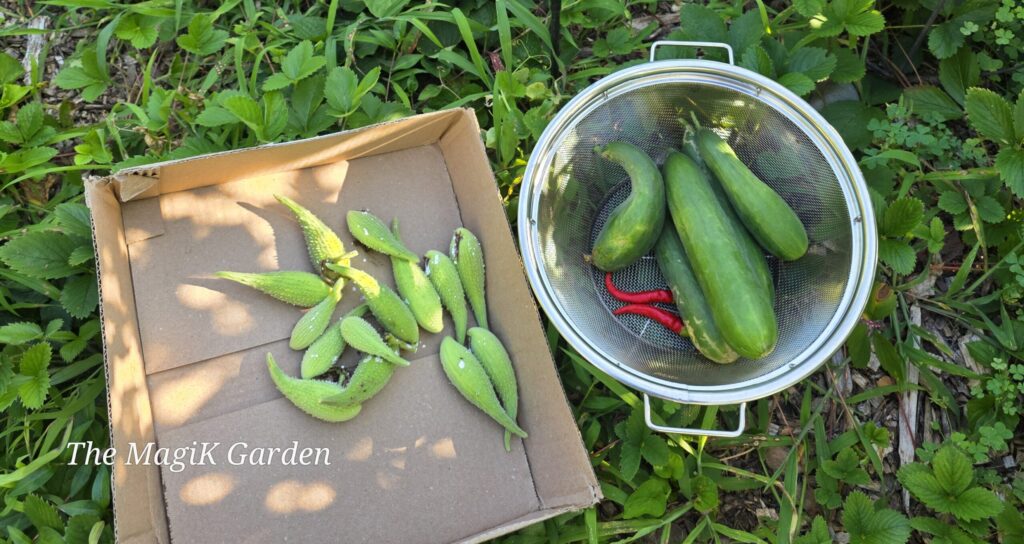
I finally took the leap after thoroughly studying Alan Bergo’s post on harvesting milkweed to try immature milkweed pods. I also recently purchased his book, The Forager Chef’s Book of Flora (affiliate), since I’d realized that knowing something is edible doesn’t always equate to knowing how to eat it.
My family thoroughly enjoyed the young milkweed seed pods, which I’d blanched then sliced into medallions and sauteed along with black forest bacon and caramelized onions into a delicious risotto. We were less a fan of the slightly older milkweed silk, which didn’t look very appetizing and were a bit tough to chew. I may have overcooked them, however.
What prompted this sudden desire to step away from our usual weekly rotation of meals was the fact that the common milkweed (which is the only milkweed native here that one can eat), absolutely insists on growing in my food forest. I have now attempted to relocate them to garden beds on more than one occasion. Each time I have, more pop up in the food forest—a concept borrowed from permaculture in which you grow an edible plant community rather than conventional vegetable gardening. They are absolutely thriving there, too. Since anything that grows there is either a weed or meant to be eaten, I’d decided I’d try eating it.
After all, what’s better than a perennial vegetable that is not only delicious, but also effortless and provides benefit to other creatures within our habitat?
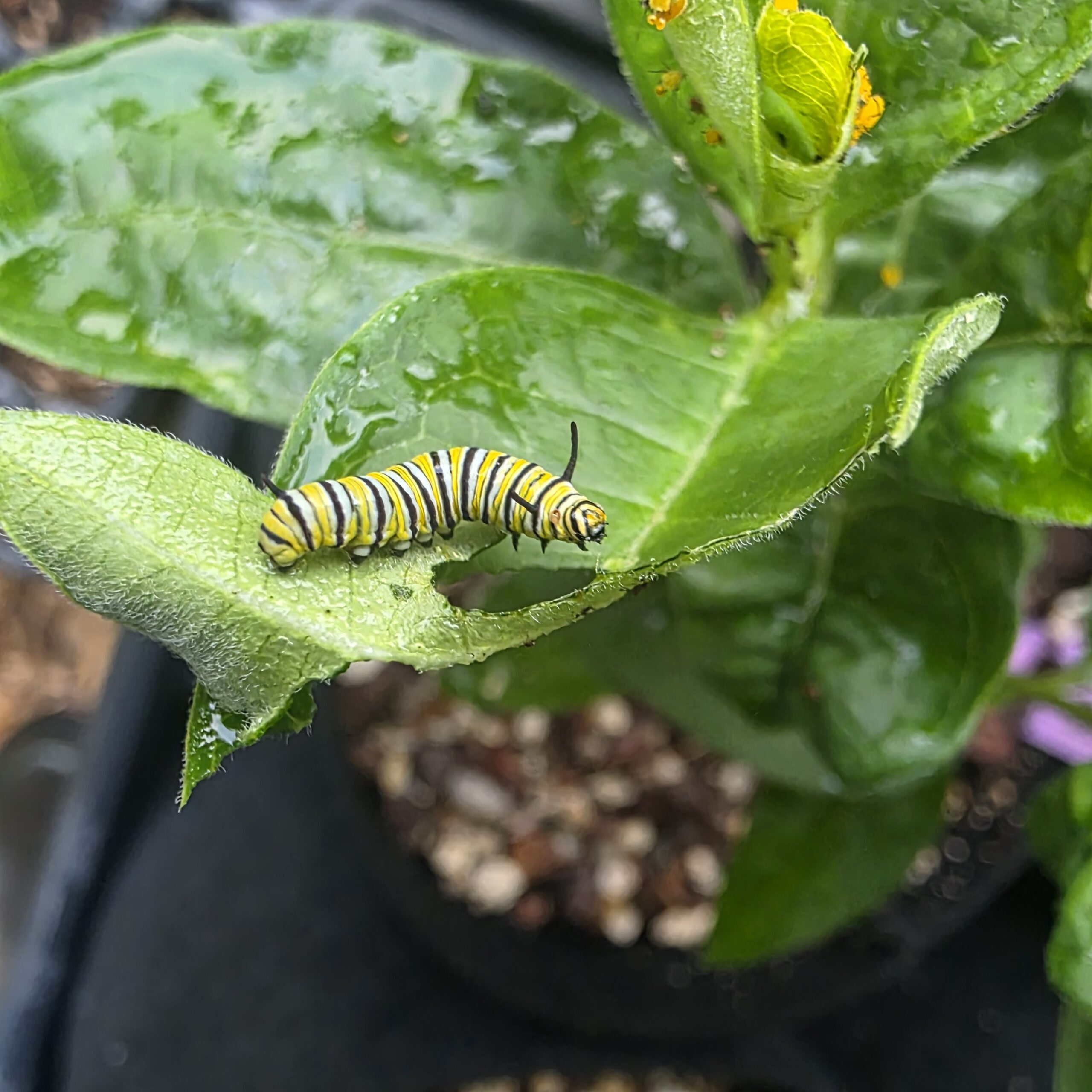
The monarchs know what’s good…
Native Food Forest
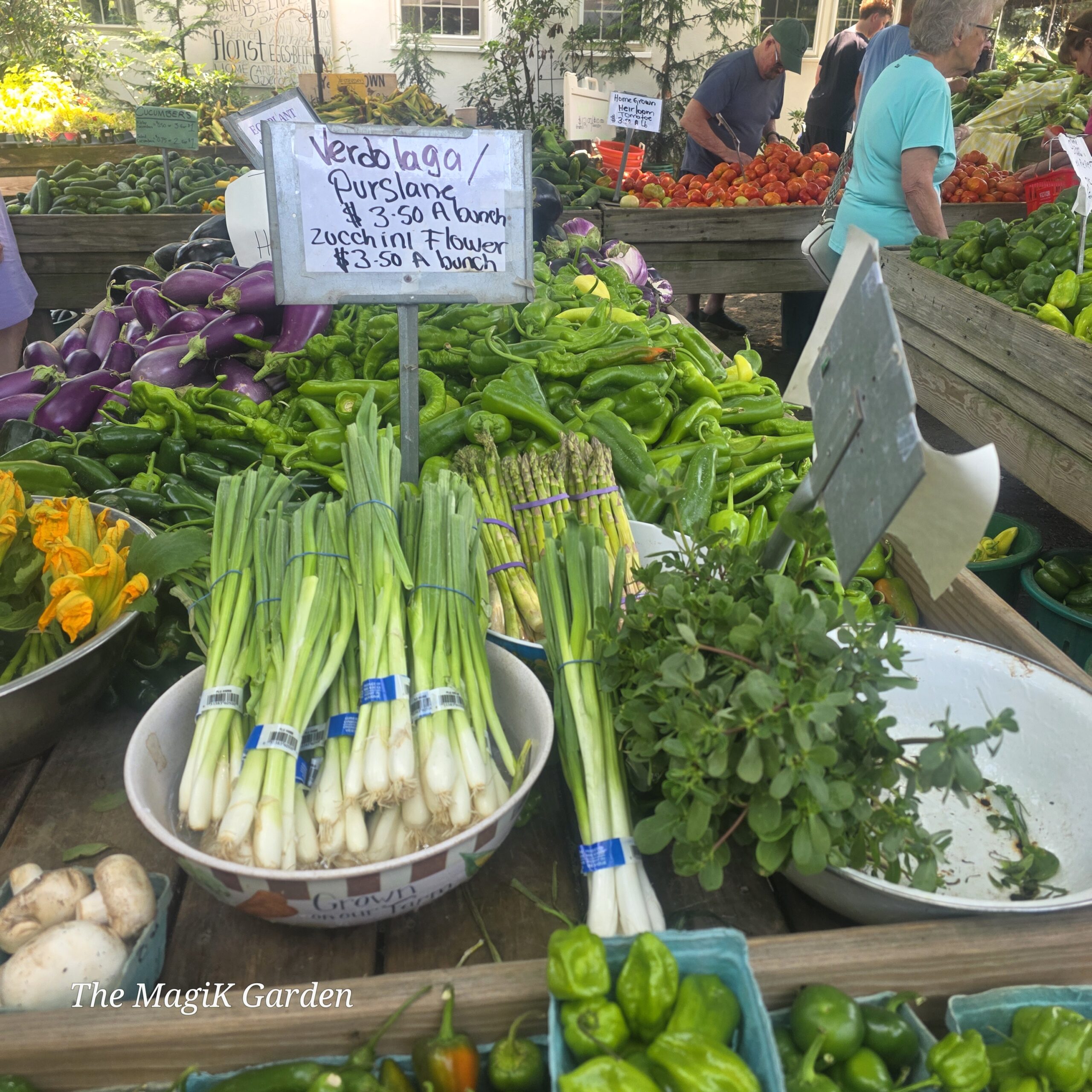
Humans are part of the ecosystem, and we also need to eat. Have you ever considered including more native foods in your diet? Link yourself back into the ecosystem by cultivating species that you, too, can enjoy. The wildlife will also thank you for it, since we eat many of the same things.
Are you looking for a native gardening community, but hate social media?
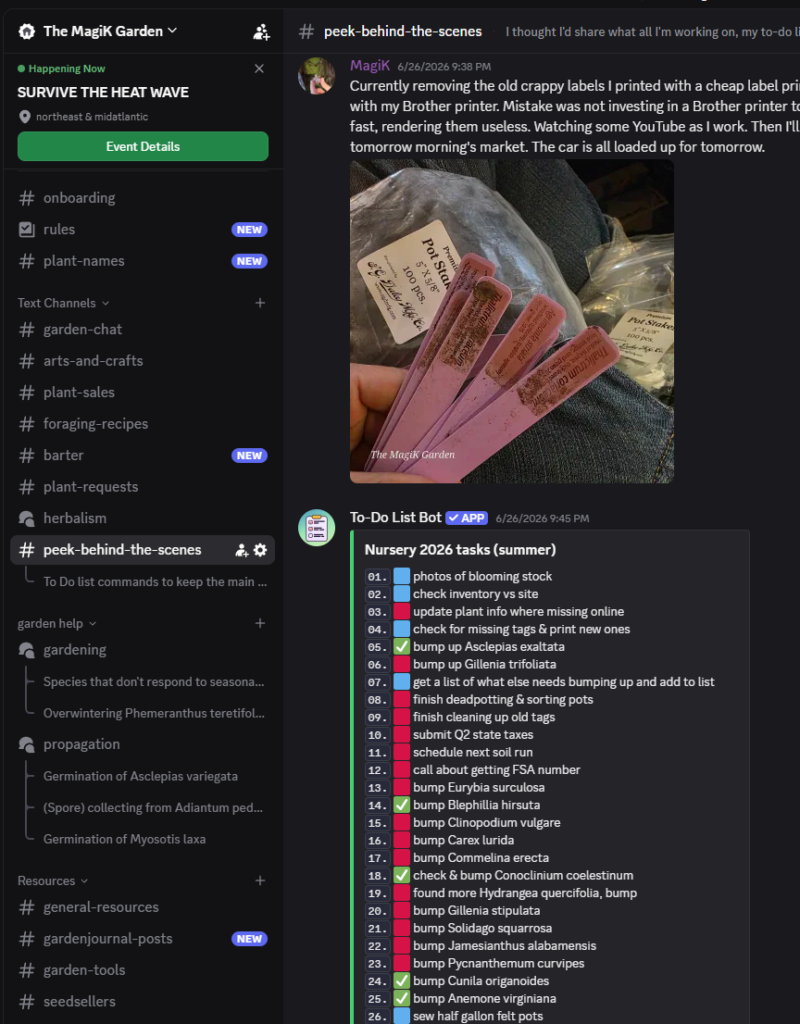
Do you wish there were some way to easily find and access help and resources, away from AI bots, spammy ads, and all the online noise? Have you been trying to connect with other people who are passionate about native gardening, but tired of “yelling into the void?”
Why not try out my newly-launched Discord server? It’s a privately-run (by myself) online space* that serves as both a community chat and an old-fashioned forum.
Best of all, it’s 100% free to join and participate.
New to Discord? Here’s a great guide on how to use it.
*Users are subject to Discord’s TOS when joining.