

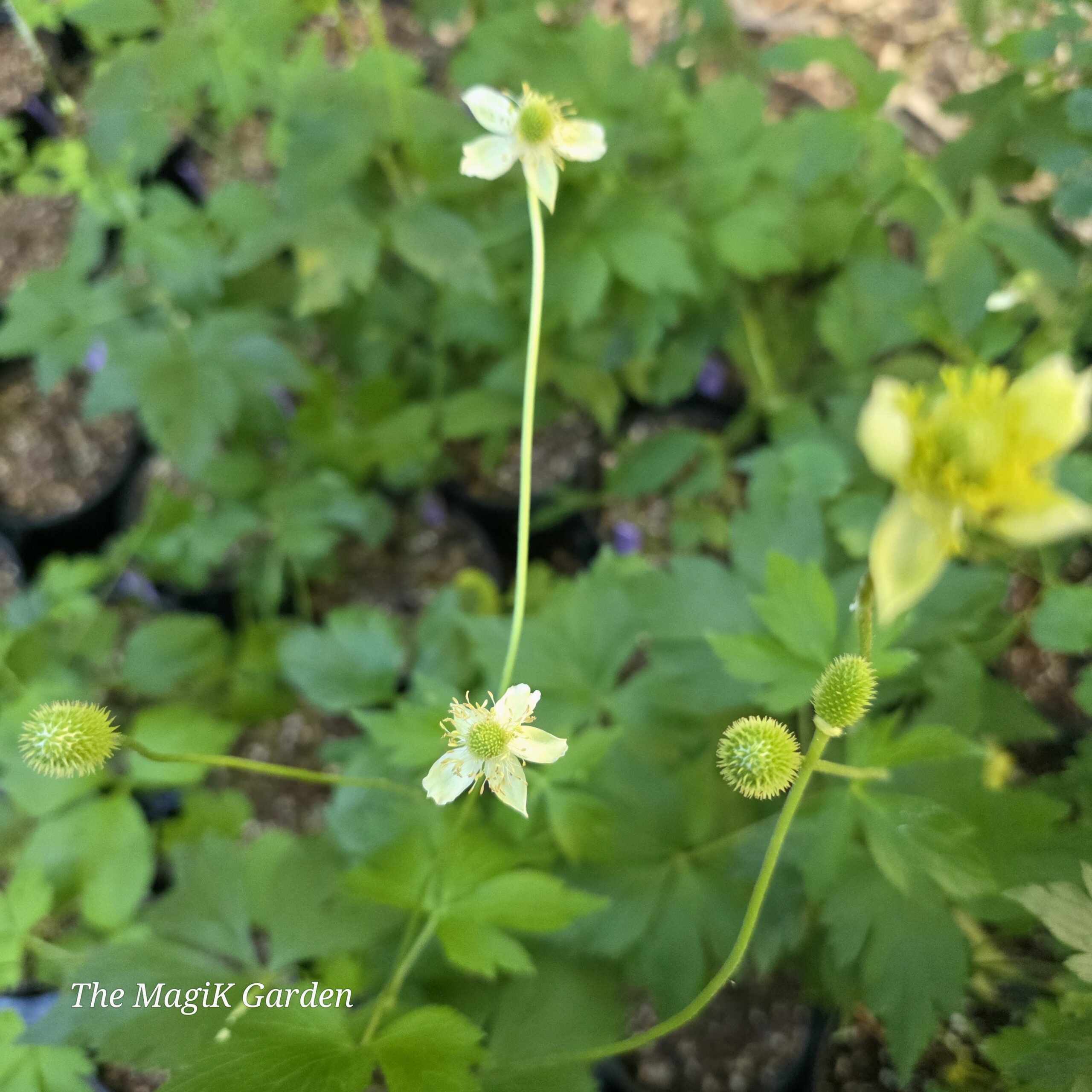
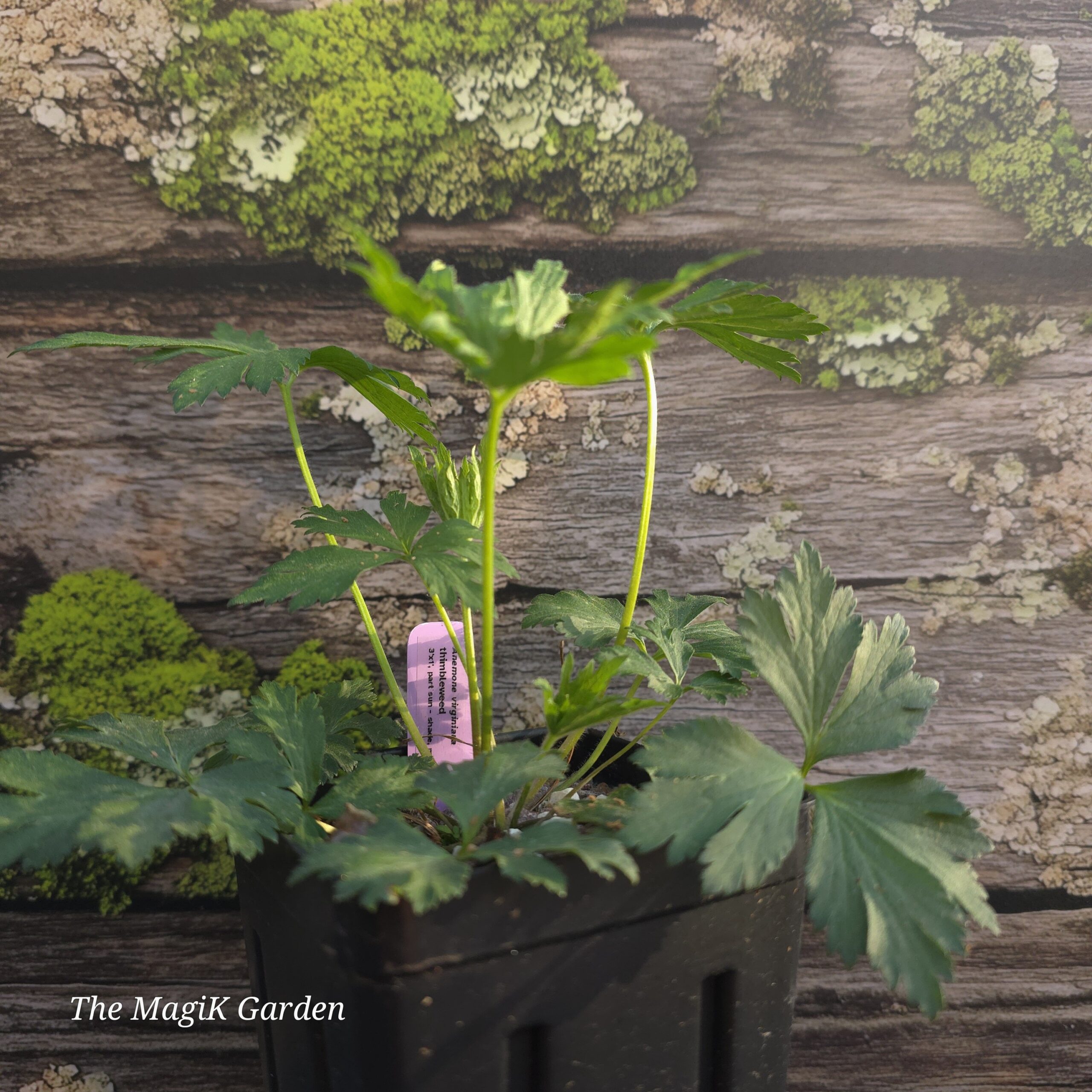
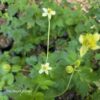
This is not the aggressive groundcover one; that would be Canada anemone. Native in southeastern PA.
Thimbleweed is on my list of must-haves for an easy-to-establish drought-tolerant woodland garden. It sports white blooms in mid-to-late spring which, once pollinated, begin growing cone-shaped seedheads that closely resemble spikey thimbles. Don’t let the spikes fool you! Come September-October, these thimbles ripen and pop open into a cottony ball of fluff, resembling miniature cattails. The thimbles, if you were to “open” them yourself, are squishy and soft, and the fluff expands almost instantly. If you do nothing, they pop open on their own, and a windy day carries them away. It’s possible that small mammals could also help disperse the seed as they search for soft material to insulate their burrows for winter, but this is just a theory.
Germination
It’s my opinion to sow them when they’re ripe, so surface sow them outdoors in mid-to-late winter. I had excellent germination rates when I immediately sowed the seed that grew out my nursery plants. You do not need to remove the fluff from the seeds before sowing. The fluff helps to both insulate and keep the seeds moist through the winter months and will naturally break down. It also helps the seeds stick to the soil to maintain contact. If you’ve ever tried to pick a dandelion seed that blew into one of your pots or planters, you’ll know what I’m talking about. Once that fluff gets wet, it almost acts like a glue clinging to the soil.
Otherwise, other sources suggest 60 days of cold & moist conditioning, with no mention of surface sowing or burying the seed. If the seed has the fluff to help hold it down, it doesn’t need to be buried. Just gently press the seeds into the soil surface and set them outside.
Seed Packet Info
You will receive at least 30 seeds. These were grown and collected from my own garden. Provenance believed to be PA based on the location where I initially collected seed to grow my own population.
Reviews
There are no reviews yet.