

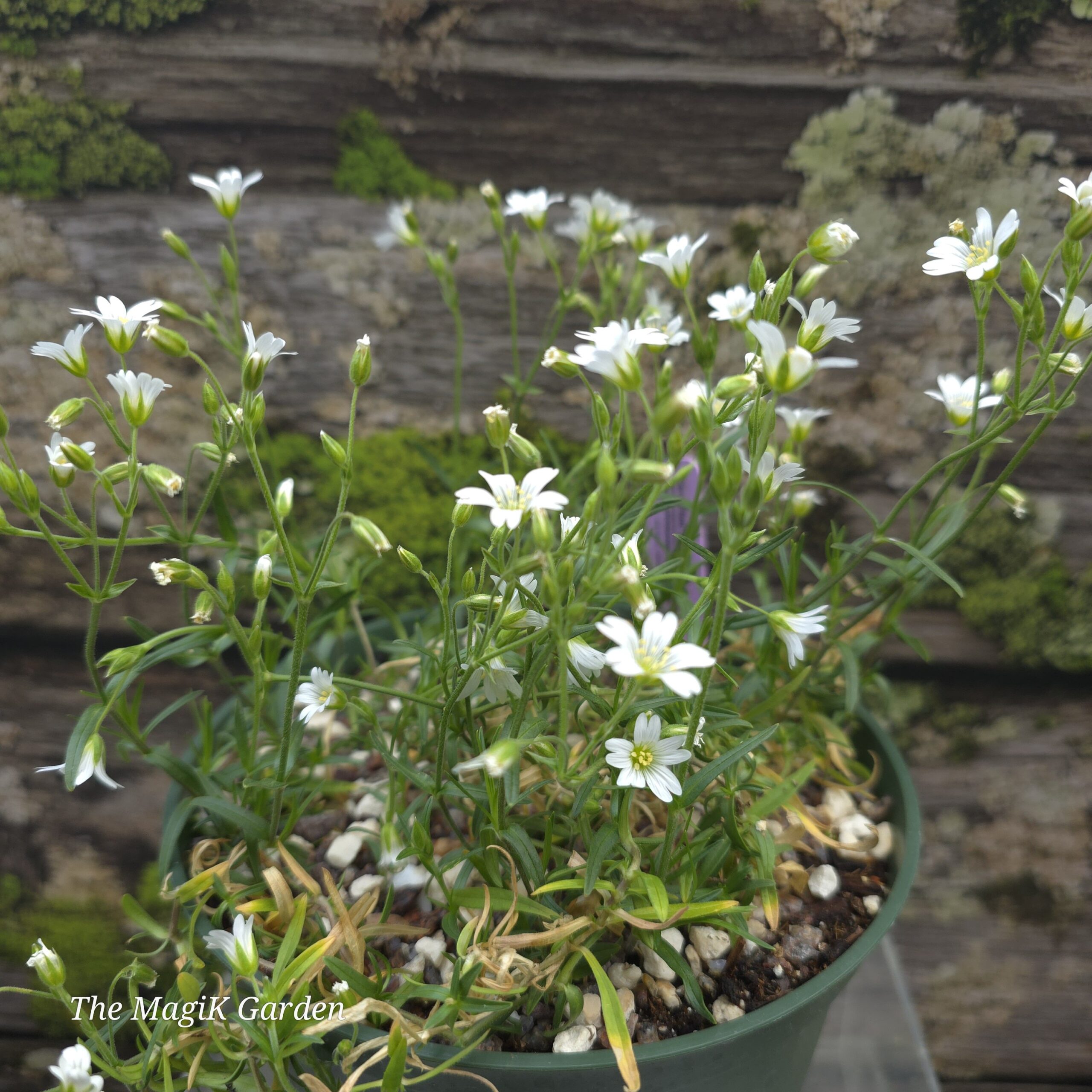
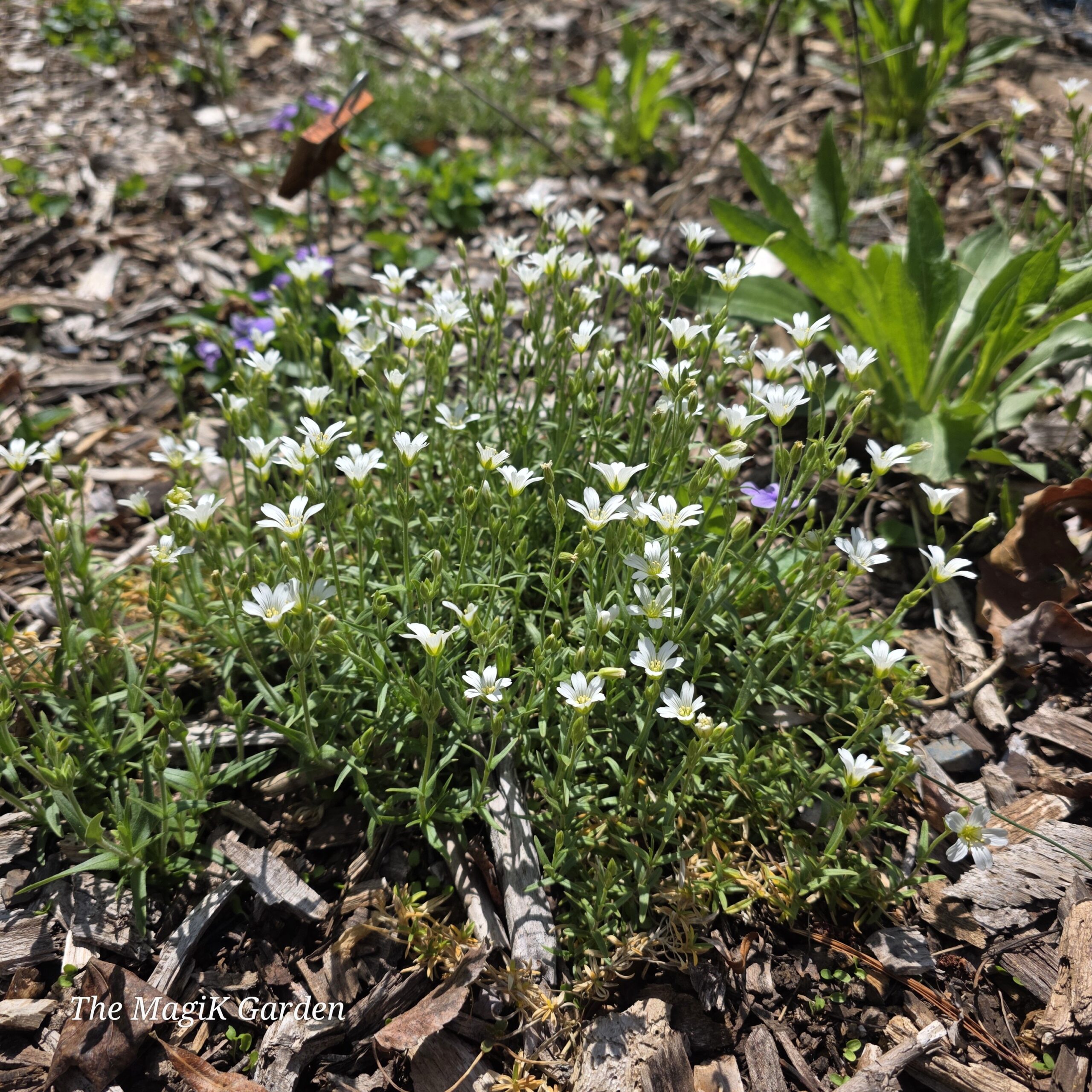
You’re likely quite familiar with the introduced, weedy chickweeds that plague all of our gardens in spring. There’s the common chickweed, which is an annual and seeds in everywhere. There’s also mouse-eared chickweed, of which there are two subspecies present here, and are perennial. What is unfortunate is that these introduced species are so prolific, you’d be lucky to ever find native Cerastium or Stellaria in the garden. I thought I’d found one of the native Stellaria, only to find out it was another likely introduced species. Pearlworts (Sagina) are yet another genus of plants, mostly introduced, that look similar in appearance.
This species includes both the native subspecies and an introduced one. In fact, GoBotany has this as species Cerastium strictum (though BONAP, which I linked earlier, still has C. arvense). I established my own population grown from seed from a source that I trust, so I know this one is the native subspecies. In the wild, it can be difficult to tell this apart from the European species.
Benefit to Habitat
The starry cerastium or large-flowered meadow chickweed is a host plant for the Chickweed Geometer.
Seed Germination
These seeds have not been lab tested for germination. I do not have enough to perform the tests.
Surface sow outdoors in spring or fall. They do not require pre-treatment, stratification or conditioning of any kind, but may benefit from fluctuating cooler outdoor temperatures.
Seed Packet Information
Seed packet contains at least 50 seeds.




Reviews
There are no reviews yet.