

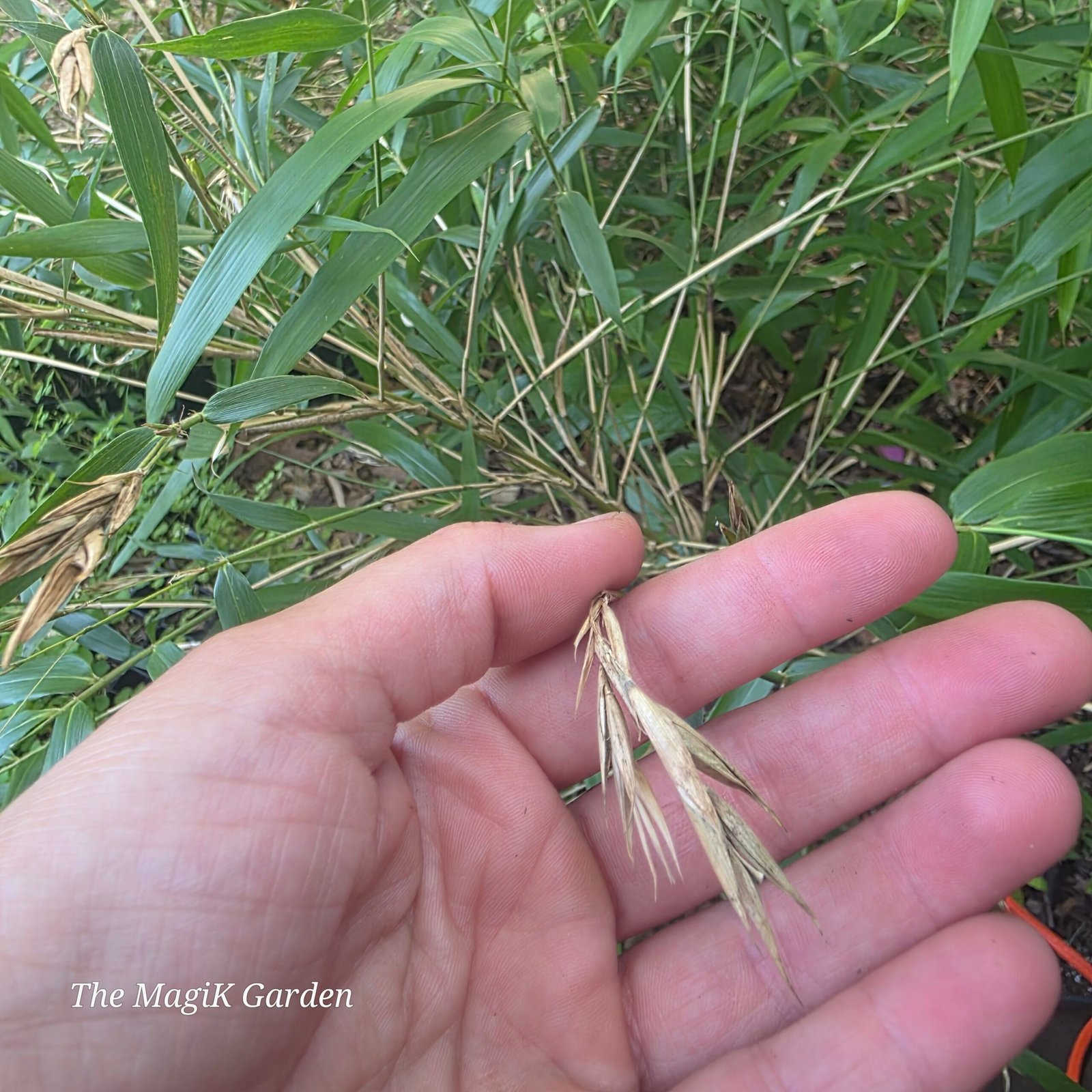
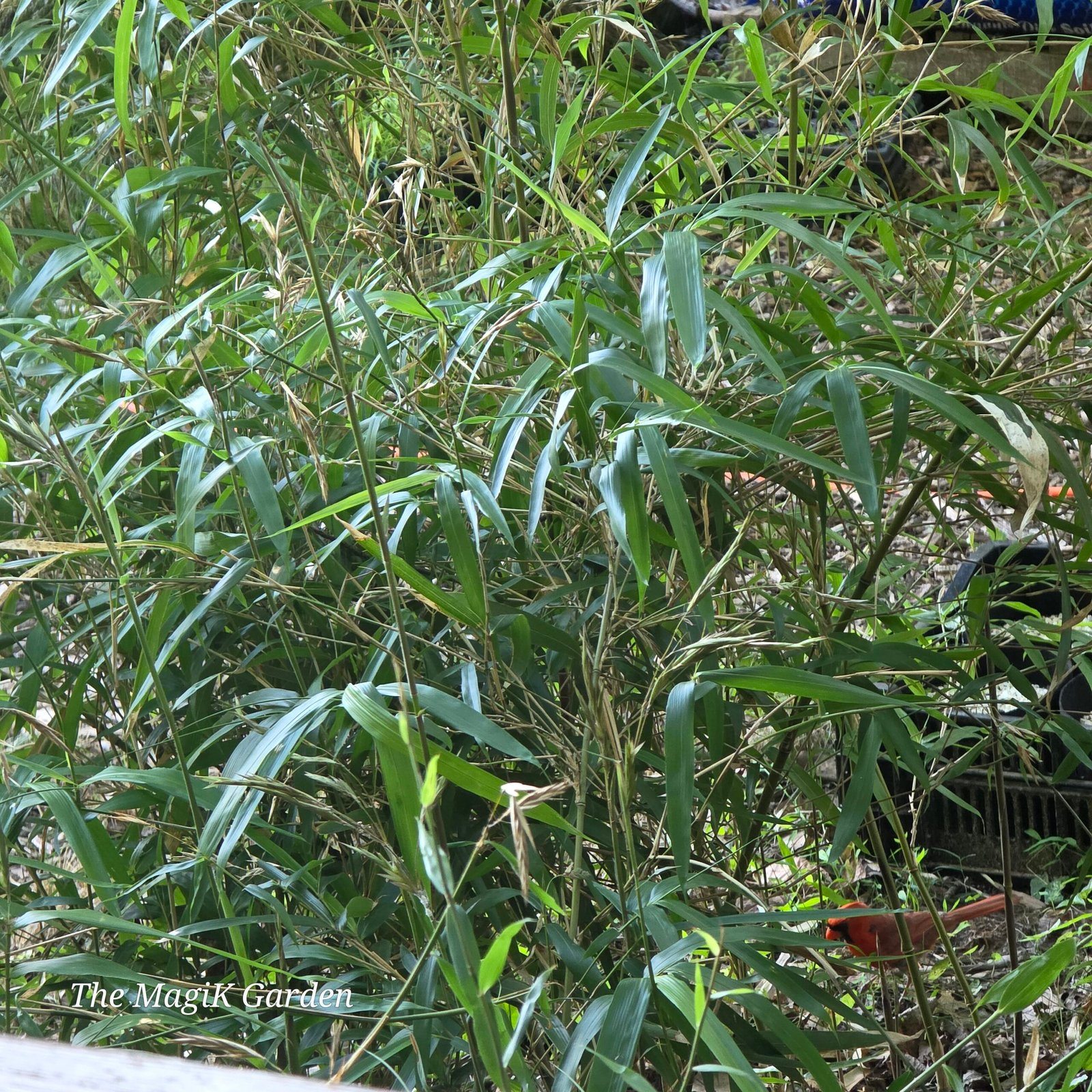
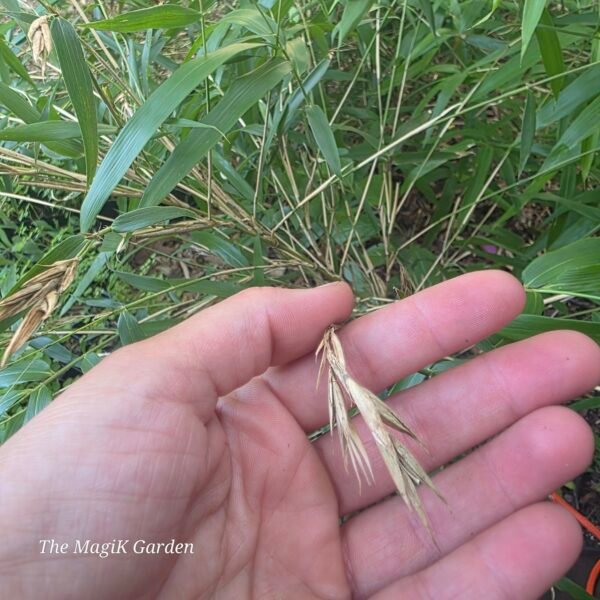
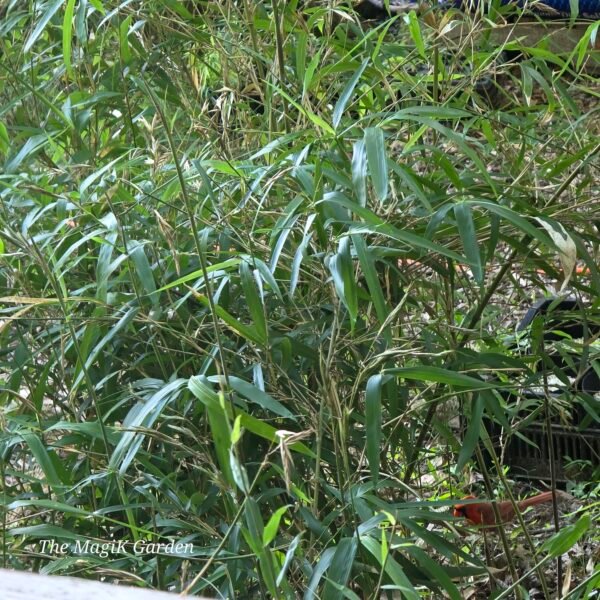
This is one of only three native bamboo species in the US, all of which belong to the same genus.
It is nothing like the invasive bamboo species you are used to seeing. The thickest I have personally seen them grow is the thickness of an adult pinky, though I wonder if it has to do with the maturity of the stand, or fire ecology (which I’d read that some Indigenous tribes would do in canebreaks). I’ve also read that once they do flower and set seed, which mine unexpectedly did for the first time in 2026, they die off after that. I don’t know if that means just the individual semi-evergreen canes that flowered or all of them, because mine did send up more canes that were slightly taller than the ones that flowered soon after it flowered and set seed.
My only experiences with this species are from seeing them in the wild when I was growing up in the south and from the one stand I’ve been growing since 2020. At its current size, my patch maybe takes up a total of 30-50 square feet. The runners don’t go very far, and they are easy to dig up if they do. They can be a challenge to transplant or take root cuttings from. In my experience, when dividing your patch, you want to make sure there is an existing cane on the rhizome you plant.
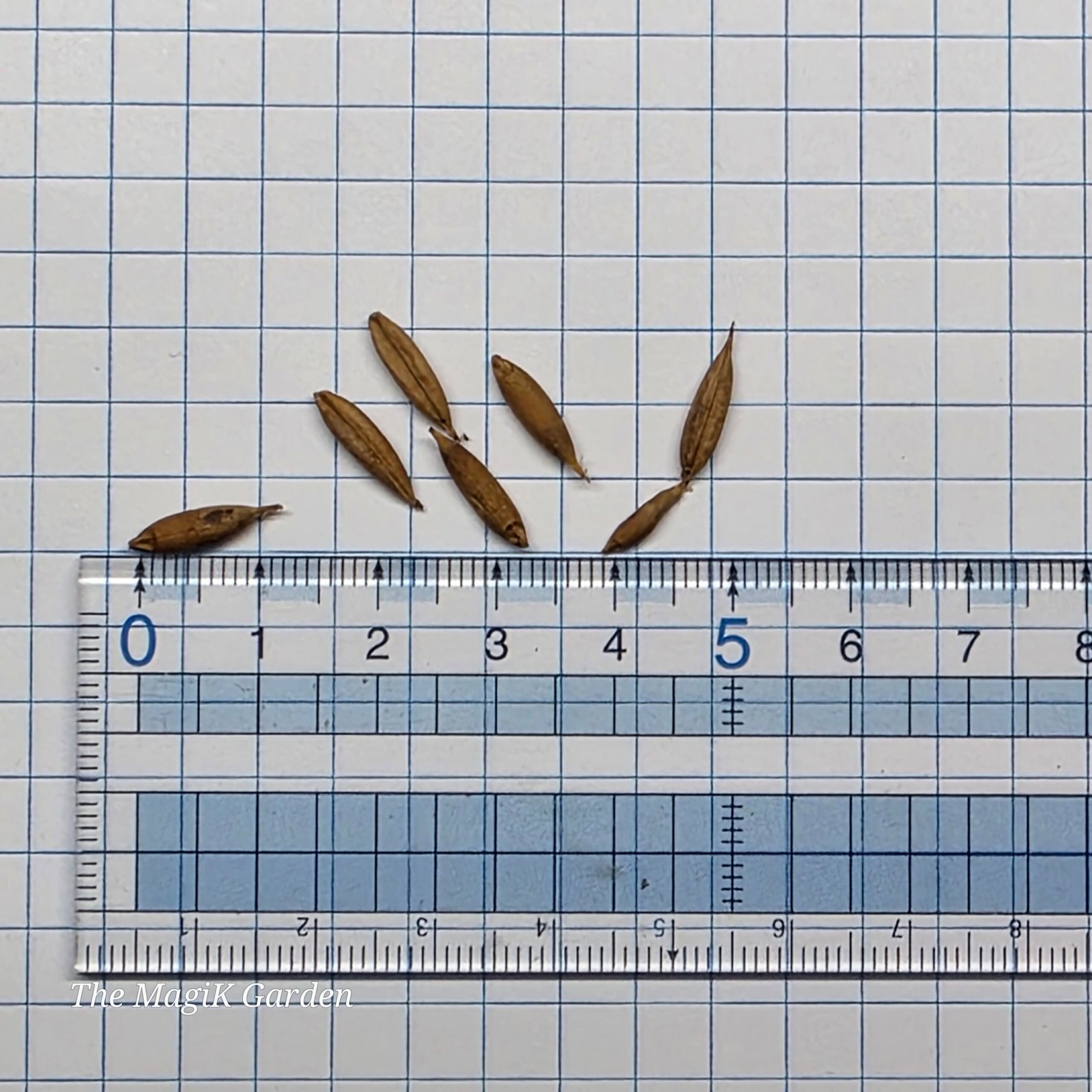
What I do know is that the seed is edible, substantially large enough to make a meal—but only one meal from my little patch—and strongly favored by cardinals. I am glad I collected some of the seed as soon as I saw it, because the cardinals wasted no time in cleaning up what was left. I can only hope that they also helped to disperse some, so that they can spread to other areas. Although it is not historically native to PA, it is native to Maryland, several counties in Delaware, one county in NJ and one in NY. This is a close near-native, not a distant one, and we are at the northernmost part of its range.
Canebreaks were once a massive ecosystem in the US, now considered endangered, and efforts have gone into restoring this habitat where it once existed. Today, it is estimated to comprise only 2% of its former habitat. Sadly, the canebreak I remember that existed right outside of the development I grew up in is long gone. It was bulldozed to put in more housing. I remember going out there to cut down canes to use as decoration in my bedroom. Even then, despite not knowing anything about natives or invasives, I recognized it to be a bamboo species. It is only by thinking back and remembering what it looked like (barely taller than myself) that I realized it was a wild patch of Arundinaria. More recently I saw stands of them growing along the Chattahoochie River in the Chattahoochie Bend State Park in Georgia—my family lives there now so I saw it during a recent visit.
Loss of the canebreak is believed to be directly responsible for the extinction of Bachman’s warbler. One can only imagine what else was lost along with this important natural habitat. These days, it is recognized as playing a vital role in soil stabilization along waterways, and its extensive rhizomatous networks also help to sequester a significant amount of carbon. In my experience, they are also effective at keeping invasive species at bay. Although the soil surrounding my patch has continual presence of Japanese stiltgrass, I have not seen that or any others manage to seed in, let alone become established within the patch.
This species is, in my experience, fully shade tolerant, though it is much slower to grow in shade. I’ve been growing mine out in the hope of transplanting some out to stabilize the banks of the gully that cuts through my woodland once I am done eradicating all the privet and other invasive species that have taken over. They do best in sandy/loamy soil, but absolutely tolerate and can spread in heavy clay. It just takes them longer to do so.
Germination
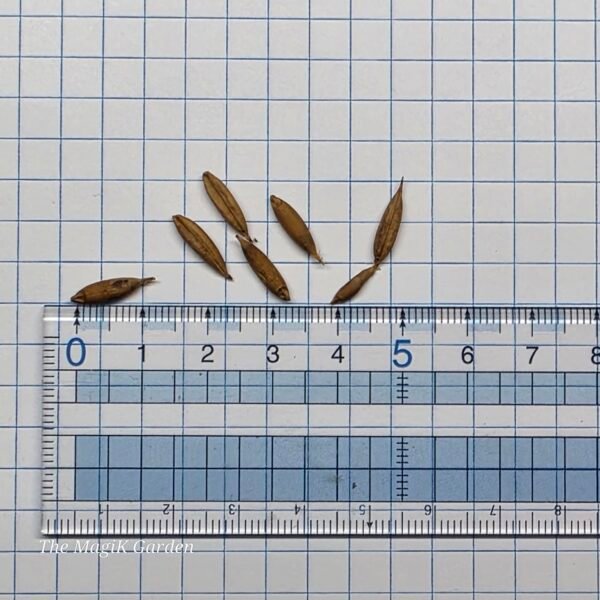
This is where you can help. I noticed that the seeds that dropped into my pots that the cardinals did not gobble up germinated almost immediately. I have not tried growing from collected seed that was stored and allowed to dry a little. I will be experimenting with this in 2026-2027. I decided to split up what remains to share with you, in case you’ve been wanting to try growing this yourself. The seed looks healthy and plump with very few blemishes, not dehisced. I did not refrigerate the seed, but kept it in a bag in a dark, dry spot outdoors before packing them up.
I would ask that anyone who does try to grow this species come back and comment on this listing with your experiences, good or bad (you can do this by leaving a review).
Please don’t downvote the listing, because by purchasing this seed, you acknowledge that you are helping to gather information on germination. I expect that my stand will continue producing seed for the time being, and if storage ends up being an issue, I will alter my methods. I opted not to refrigerate it because of one account I read that it showed only 10-20% success being sown after refrigerated storage. Sown fresh, I had a 90% success rate. If it has a very short viability in storage, then in the future I will list and sell them as soon as they are ripe. I do not want to discourage anyone from trying to grow this in the future for the following reason:
The more of us who try growing it and sharing our experiences, the better we can help with restoration efforts in the south. Think of this as a new form of citizen science. Document everything: when you sowed it, when it germinated, what soil you used, sowing method used, etc. If you do not feel comfortable leaving it as a review, you can share it privately with me and I will post an update on this listing with what worked and what didn’t. Based on the appearance of the seed and seeing how well it germinated this past summer, I have no reason to believe that the seed is not viable.
Seed Packet Information
You will receive at least 20 healthy, plump seeds which have been thoroughly cleaned (outer “husks” removed in layman terms). One account I read stated that this increases germination success. These will be carefully packed in a padded envelope if mailed to reduce chances of breakage during mailing. These were collected from my own stand of Arundinaria gigantea in July 2026, stored dry, and packed in October. Because I am required to put an expiration date on the packet, I opted for end of 2027, but I honestly do not know how long these seeds are viable. You may try sowing them indoors or out.
Thank you in advance for choosing to contribute data to our understanding of how to best grow this species. Next year I will make a stronger effort to collect as much seed as possible. I’m sure the cardinals will understand.
Limit: 1 packet per person. What is listed is all I have.

Reviews
There are no reviews yet.