


You will never catch me oohing an ahhing over daffodils and tulips. In fact, I tend to rip them out. Hyacinths and crocuses too.
While I do have a few bearded irises in front of my home, they’re there for sentimental reasons. A very close friend of mine split them from her own, drove over and planted them for me. This was during a time when I wasn’t doing much gardening. I was an overwhelmed mother with a toddler and a baby with severe food allergies. So she surprised me by adding irises and spiderworts to my severely neglected garden. So now, when I see irises, which are her favorite, they remind me of her, and how much love she had for me at a time when I felt alone. That’s why they’re there. I do split them off and give them away to others… I don’t need that many.
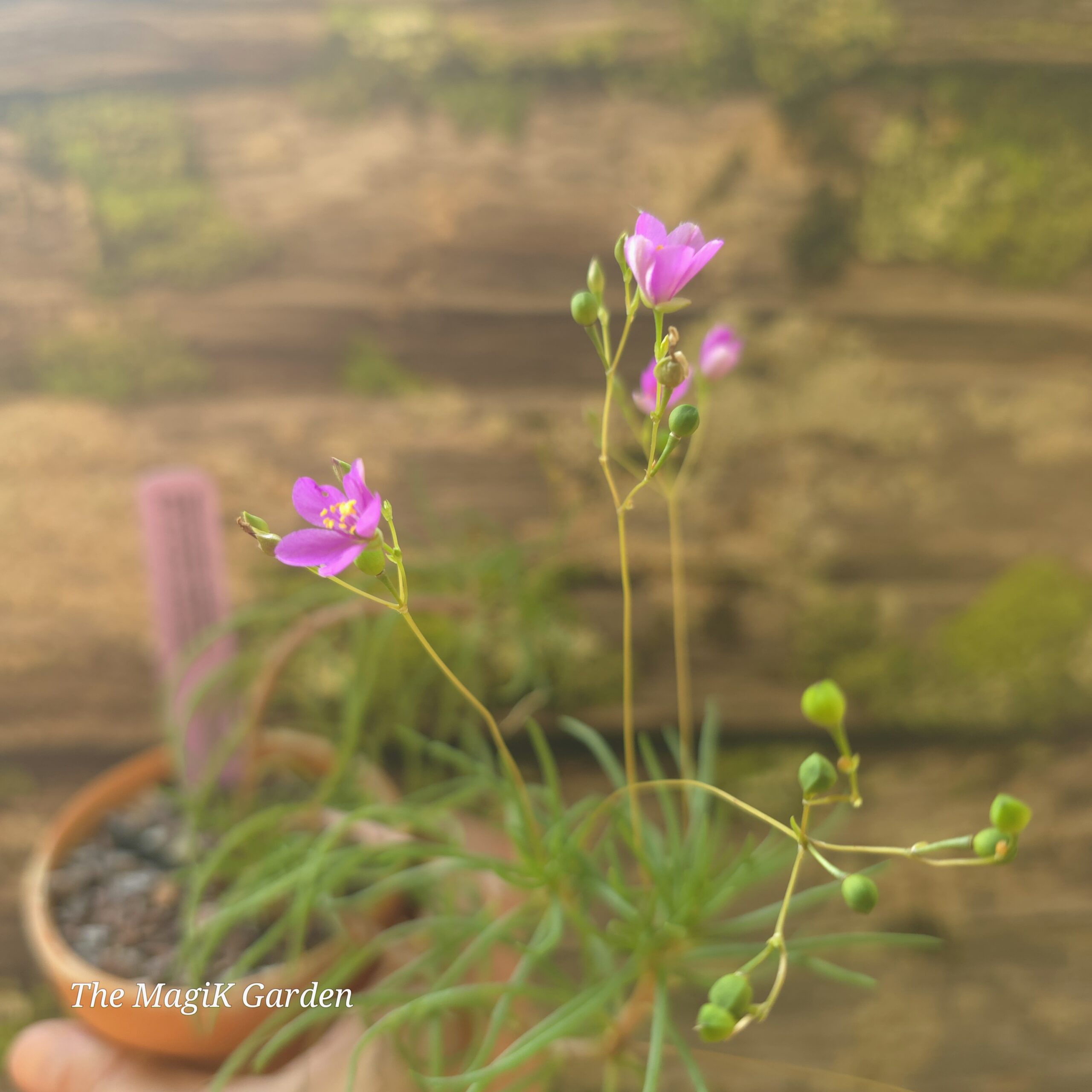
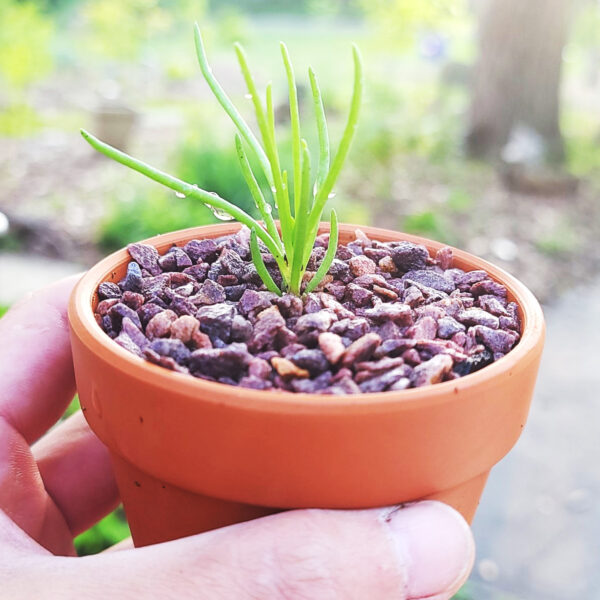
On the other hand, show me a tiny little succulent that thrives in the harshest conditions, and you’ve got my attention. What about flowers that are so ephemeral they each exist for barely more than their fifteen-minutes-of-fame? How about a tiny native plant that can (and probably should be) kept in a clay pot in perpetuity to be admired?
How can this be both so tough and yet so fragile and precious at the same time?
Why is it that a single flower lasts barely a day, but a large, mature clump (which isn’t that large) can produce around 100 flowers? How can individual flowers be so ephemeral (that’s where the name Phemeranthus came from), but the plant overall have a blooming season that can span from spring through fall?
No, you can have your Vegas-showflowers. You’ll find me crouched among the rocks looking at the ones which miraculously have not yet fallen through the cracks. That’s right, this little succulent is a species of concern, G4 apparently secure in the country, and s2 imperiled in Pennsylvania.
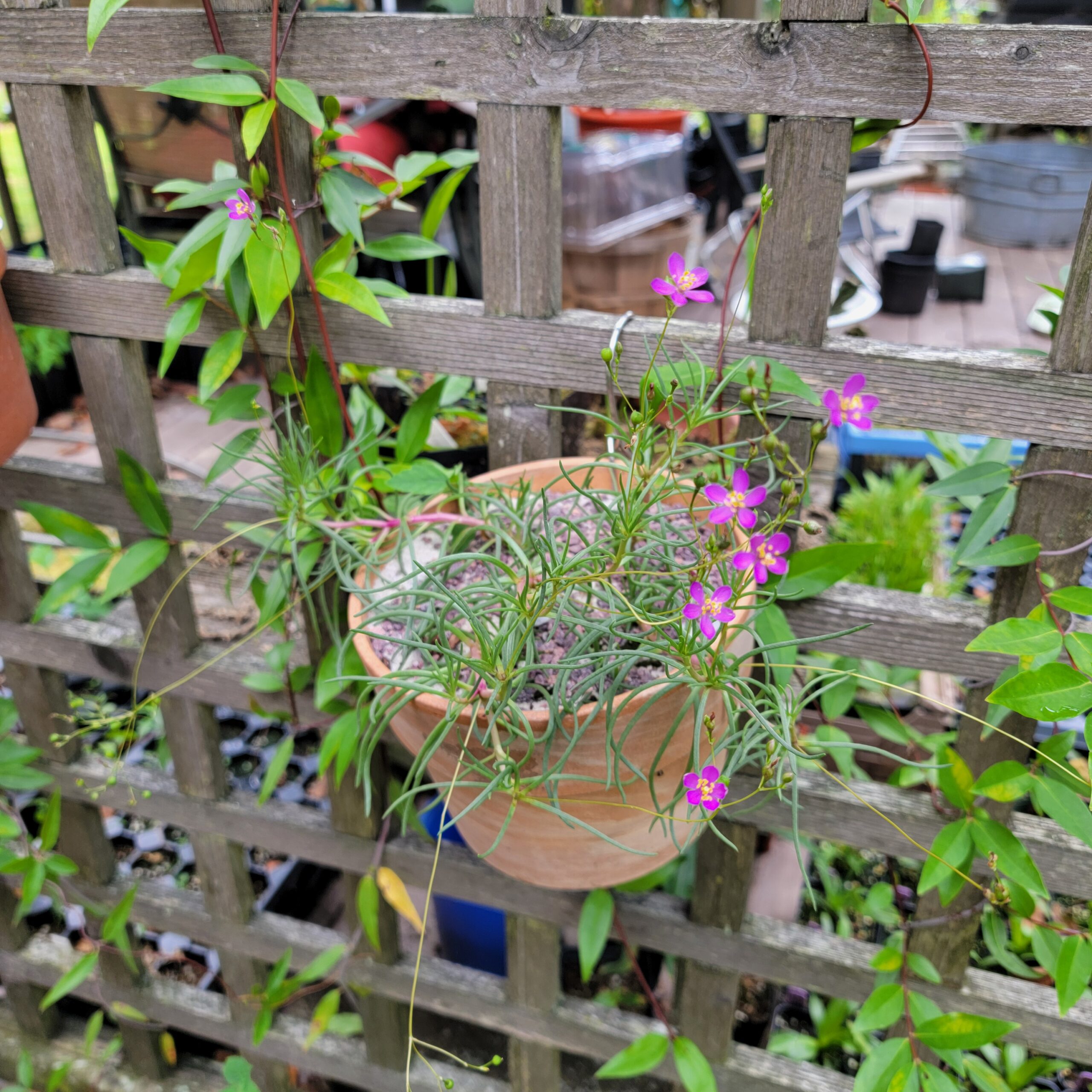
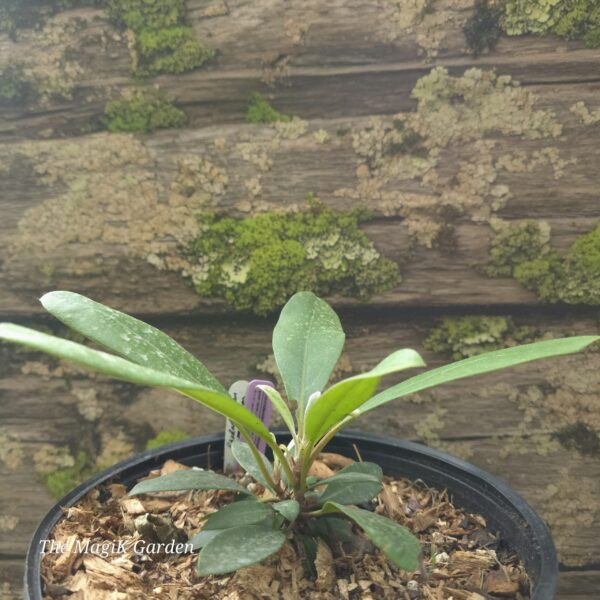
You do not have to remove this little plant from its pot. That’s why I am selling them in clay pots. Their roots are not substantial at all. In winter, would suggest bringing it into an area that is cool and protected from the elements – garage, covered porch, 3-season room. During the dormant season, water sparingly – just enough to keep the soil from becoming bone-dry. If you do have well-draining soil or a larger communal pot for plants with similar conditions, you can plant it out. You will need to be extremely careful, because the stem is quite fragile. Handle with care. If you decide to plant it out and do not need the pot, I will gladly take it back for future plants.



jbpekter (verified owner) –
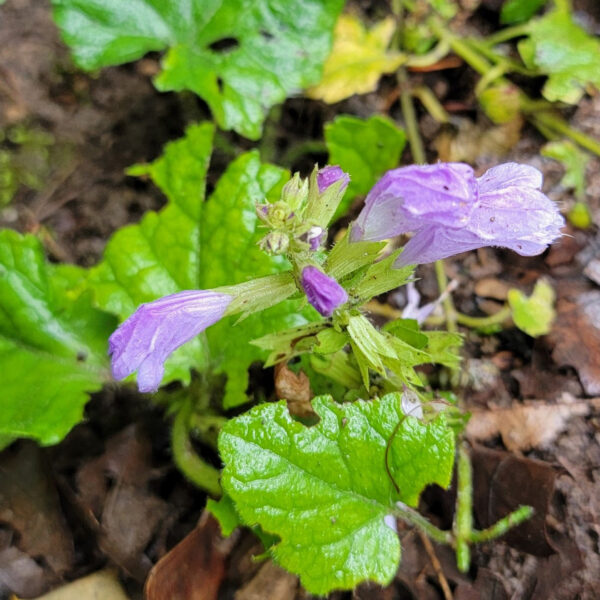
I bought 3 of these, which Magi put into one pot – my request, and they are now hanging on my fence. They have the cutest little purple flowers. Wish I could attach a photo to show their beauty, but take my word, they are really nice and they are blooming even in our heat!